


The short answer: the 6N23P (6Н23П) is the genuine Soviet equivalent of the 6DJ8 / ECC88 family — same pinout, same transconductance, same gain, near-identical operating point. The 6N1P (6Н1П) is not. It plugs into the same socket and it will make sound, but it draws a 600 mA heater current against the 6DJ8’s 365 mA and delivers roughly a third of the transconductance. The Soviet reference literature itself files the 6N23P as the ECC88 analog and pairs the 6N1P with a completely different Western family.
Let’s find out what the datasheets actually say.
Where the confusion comes from
The confusion has three causes:
- The pinout matches. 6N1P, 6N23P, and 6DJ8 all use the same noval basing: triode sections on pins 1-2-3 and 6-7-8, heater on 4 and 5, and pin 9 tied to an internal shield between the sections. Everything fits every socket, so the swap is physically effortless — the trouble arrives as a wrong operating point, and in tightly budgeted gear as an overloaded heater supply.
- The gain looks the same on paper. Amplification factor is 35 ± 7 for the 6N1P and about 33 for both 6N23P and ECC88. A buyer comparing one number sees “equivalent.”
- Decades of shared naming. The two types have appeared side by side in substitution lists and catalogs for so long that the association stuck.
A tilde in front of a type number — “6N1P ~6DJ8” — is the accurate way to write the relationship: similar, not the same. The difference sits in two numbers: heater current and transconductance.
The numbers, side by side
Values from the 6N23P, 6N23P-EV, 6N1P, and 6N1P-EV Soviet datasheets, and Philips’s ECC88 sheet:
| Parameter (per section) | ECC88 / 6DJ8 | 6N23P | 6N23P-EV | 6N1P |
|---|---|---|---|---|
| Heater | 6.3 V / 365 mA | 6.3 V / 310±25 mA | 6.3 V / 310±25 mA | 6.3 V / 600±50 mA |
| Transconductance | 12.5 mA/V | 10–12.7 mA/V | 12.5±2.5 mA/V | 4.35 mA/V |
| Amplification factor | 33 | 34±9 | 32.5 | 35±7 |
| Anode current (typ.) | 15 mA | 15±5 mA | 15±5 mA | 7.5±1.5 mA |
| Max anode voltage | 130 V | 300 V | 300 V | 300 V |
| Max anode dissipation | 1.8 W | 1.8 W | 2.0 W | 2.2 W |
The 6N23P matches the Philips sheet almost line for line. The 6N1P is a different tube: lower transconductance, more dissipation, and a 600 mA heater against the 6DJ8’s 365 mA and the 6N23P’s 310 mA. Drop a pair of 6N1Ps into an amp designed for 6DJ8s and the heater winding has to supply roughly an extra half-ampere. In a circuit biased around 6DJ8 transconductance — a cascode, an SRPP, a low-impedance line stage — the 6N1P lands at a visibly different operating point.
Equivalent does not mean identical, though, and the fine print differs in both directions: the 6N23P’s 300 V anode ceiling is far more generous than the ECC88’s 130 V, inter-electrode capacitances differ by fractions of a picofarad, and the heater-to-cathode ratings are structured differently. Philips rates the ECC88 asymmetrically and per section — 50 V in general, but 150 V with the cathode positive (DC component up to 130 V) on the section the datasheet assigns to the upper seat of a cascode. The Soviet ratings are symmetric: 200 V in either direction for the 6N23P, 150 V for the -EV. An SRPP or cathode-follower stage that parks a cathode well away from heater potential deserves a check against the exact sheet either way.
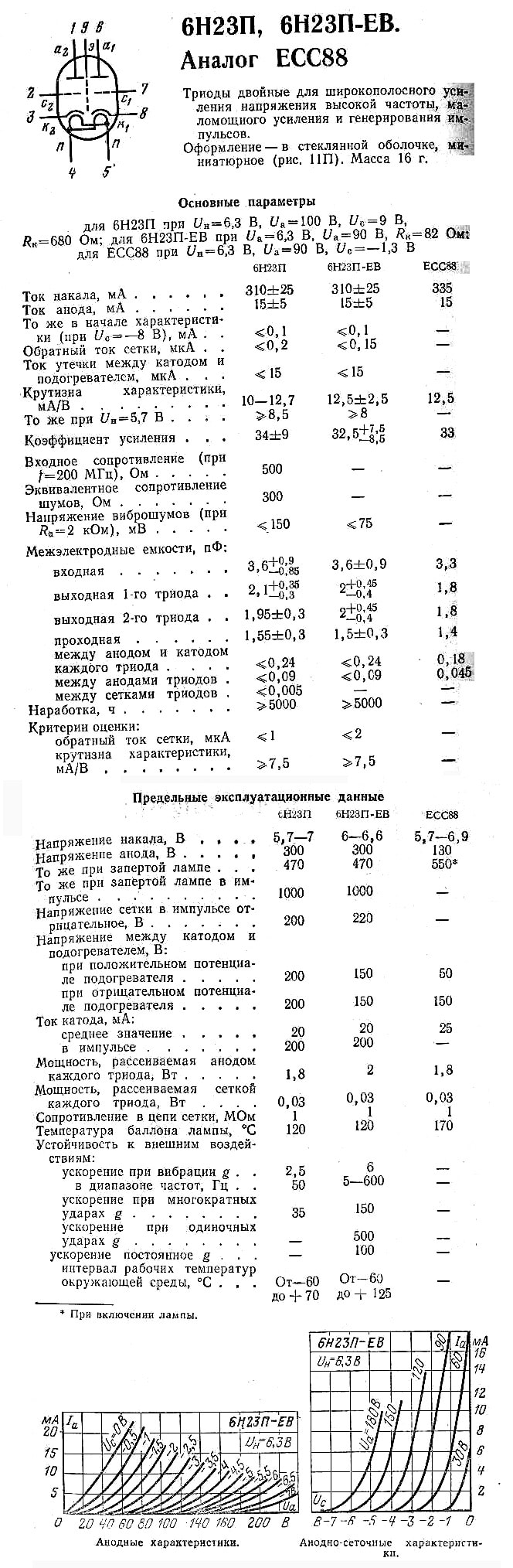
The Soviet reference page says it in the title: «6Н23П, 6Н23П-ЕВ. Аналог ECC88» — with all three tubes tabulated side by side. Same scan as on the 6N23P-EV datasheet page. One print quirk: it quotes the ECC88 heater at 335 mA where the Philips sheet itself says 365 mA — small conflicts like this are common between handbook editions, and where it matters the manufacturer’s own sheet wins.
What the Soviet handbooks actually say
The Soviet literature made both calls explicitly:
- The 6N23P reference entry is literally titled “Analog ECC88” and tabulates the Soviet tube against the Philips type column by column.
- The 6N1P handbook entry closes with: “The 6N1P is an analog of the 6N8S. The two tubes are interchangeable; application circuits for both are identical.” The 6N8S is the Soviet 6SN7 — an octal, medium-gain audio triode. In other words, Soviet engineers treated the 6N1P as a 6SN7-class tube in a noval bottle, not as a 6DJ8-family type. Builders who have compared the published curves reach the same conclusion: the closest US type to the 6N1P is the 6BQ7A, not anything in the 6DJ8 family.

Philips E88CC, the special-quality version of the ECC88. Photo: Alex P. Kok, Wikimedia Commons, CC BY-SA 4.0.
A quick map of the Western family, since listings mix the names freely: ECC88 = 6DJ8 (consumer grade), E88CC = 6922 (special quality: tighter tolerances, a 10,000-hour life rating, usually gold pins — and its own heater spec of 300 mA where the ECC88 draws 365 mA), and CCa is the German post-office selection of the E88CC. The two Western grades are close relatives rather than one tube with two labels, and the 6N23P sits between them: the Soviet reference files it as the ECC88’s analog, while its 310±25 mA heater actually falls inside the E88CC’s 285–315 mA window. The Soviet catalog never split the type into that many grades — the one factory upgrade it got is the -EV suffix.
6N23P vs 6N23P-EV: what the suffix buys
The -EV (-ЕВ) version is the same electrical design with a ruggedization package. From the Soviet ratings table, the differences that matter:
| Rating | 6N23P | 6N23P-EV |
|---|---|---|
| Vibration tolerance | 2.5 g | 6 g (5–600 Hz) |
| Repeated shock | 35 g | 150 g |
| Single shock | — | 500 g |
| Ambient temperature | −60…+70 °C | −60…+125 °C |
| Vibration noise voltage | ≤150 mV | ≤75 mV |
| Anode dissipation | 1.8 W | 2.0 W |
| Heater voltage window | 5.7–7.0 V | 6.0–6.6 V |
Two of these rows matter in practice. First, the vibration-noise spec — half that of the plain tube — is the closest thing to a factory microphonics rating, and it is why the -EV tubes are the safer pick for a phono stage or a high-gain input position. Second, the tighter heater window on the -EV is not a downgrade: the durability rating assumes the heater is held closer to nominal, and the 6N1P-EV passport carries the same logic in words — it directly instructs not to run the heater above nominal if long life is the goal. Rated service life differs by document edition: the early handbook rates the plain 6N23P at ≥1,000 hours, while the later combined specification lists ≥5,000 hours for both versions.
On dates and factories: the 1974–75 Reflector silver-shield tubes with a single-wire getter post are their own collector story — covered in detail in the 6N23P SWGP “Holy Grail” post — but a tested Reflector pair or a Voskhod rocket-logo set from other years delivers the same electrical equivalence for far less money. Which factory or year sounds better is a matter of taste rather than datasheet fact — the numbers above hold for all of them.
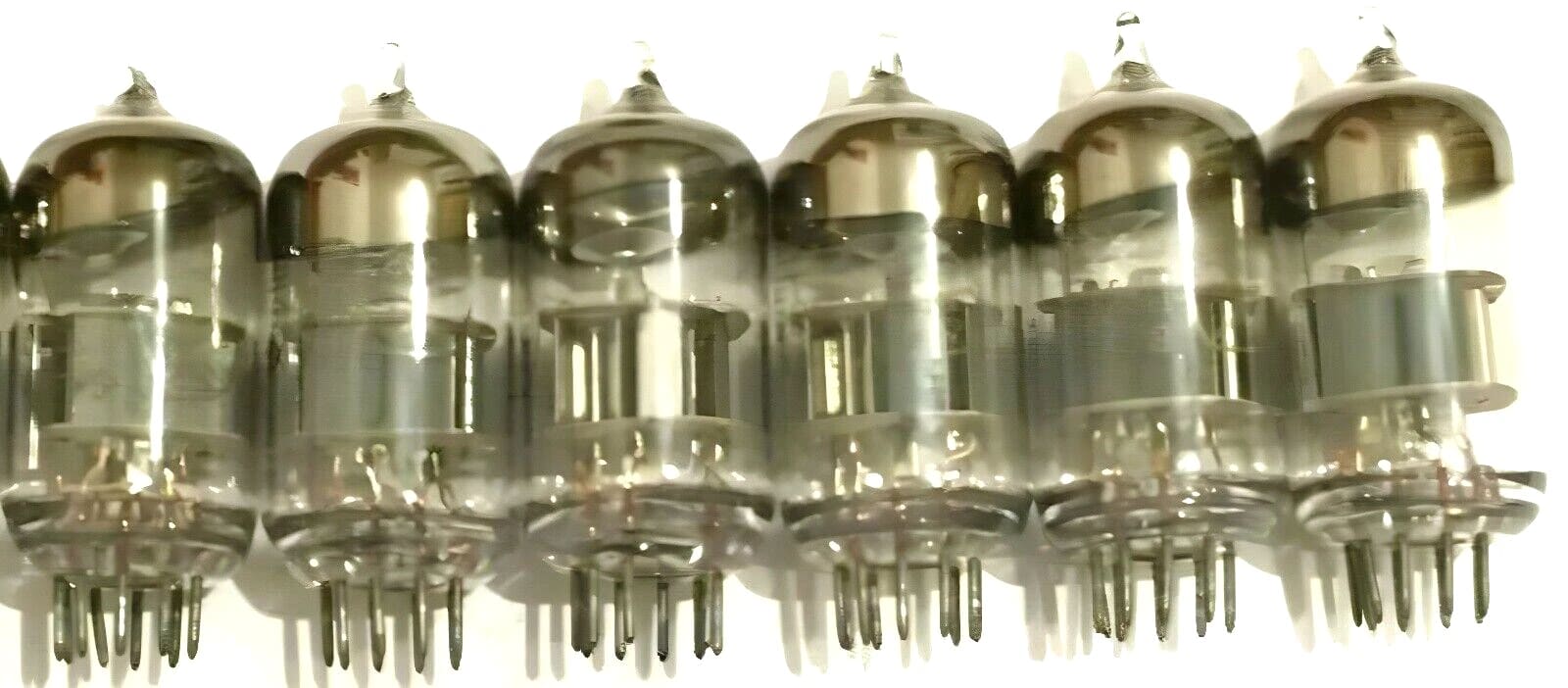
Voskhod-made 6N23P. The Kaluga plant’s rocket logo is one of the two big 6N23P factory marks, alongside Reflector’s.
Where the 6N1P is the right tube
None of this makes the 6N1P a bad triode — it just makes it a different one. It earns its place where the circuit was designed around its actual numbers:
- Equipment that specifies it. Soviet gear used the 6N1P everywhere, and it appears in Western hi-fi too: the Audio Research VS55 uses three 6N1P tubes as its input and driver stage.
- 6SN7-style duties in a noval socket. Since the Soviet handbook declares it interchangeable with the 6N8S, it covers medium-gain line stages and phase inverters where a 6SN7-class tube is wanted but only a 9-pin socket exists — with a generous 2.2 W of anode dissipation per section.
- Builds starting from a clean sheet. A designer picking operating points from the 6N1P datasheet rather than inheriting a 6DJ8 circuit gets a rugged, cheap, plentiful triode: NOS 6N1P-EV quads cover a stereo build with a spare, and used 50-packs make it one of the cheapest ways to prototype with real tubes.
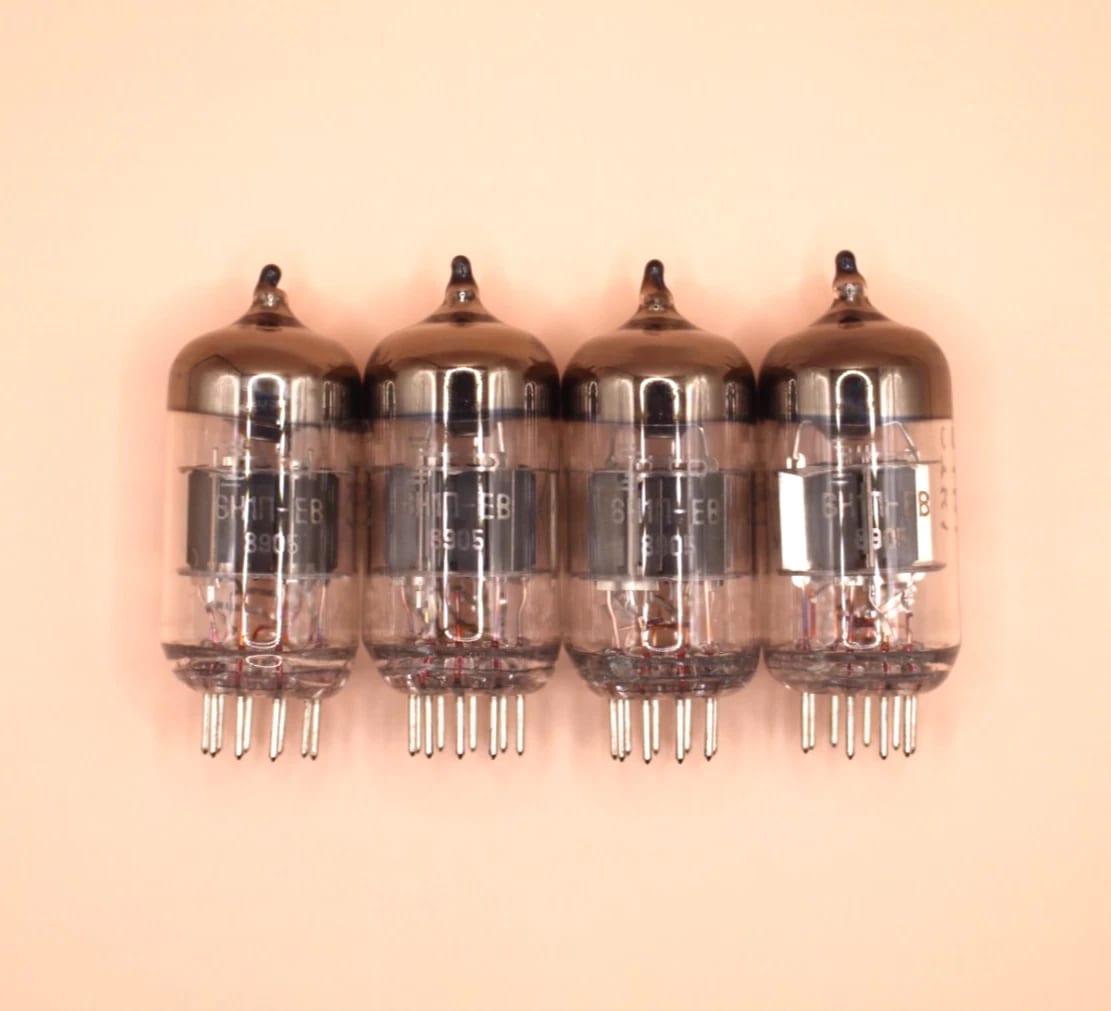
NOS 6N1P-EV, same-date quad. A good tube in a circuit designed around its actual numbers.
The one place to stay skeptical is the reverse swap logic: “my amp shipped with 6N1P, so any 6DJ8 will drop in.” The heater budget works in that direction (365 mA into a 600 mA allowance), but the bias point moves just as far — a 6DJ8-family tube in a 6N1P circuit idles at a different current than the designer intended. Check the operating point either way.
Buying checklist
- Amp designed for 6DJ8 / ECC88 / 6922: buy 6N23P. Where the circuit expects the special-quality grade (E88CC / 6922) — and for input or phono positions generally — prefer the -EV or a tested pair with matching measurements; for line stages, any healthy tested 6N23P does the job.
- Series-heater or tight-transformer gear: never substitute a 6N1P for a 6DJ8-family tube — the 600 mA heater is the hard stop.
- Matched pairs matter for balanced and SRPP stages. Section-to-section and tube-to-tube matching is what the “matched” grading on listings refers to — see how those numbers are measured in the L3-3 tester post.
- Suffix and date decoding: the -EV marking, OTK stamps, and date codes on any of these tubes read per the Soviet tube markings guide.
Bottom line
If the socket says 6DJ8, ECC88, E88CC, or 6922, the Soviet tube that genuinely belongs in it is the 6N23P — the Soviet literature itself calls it the ECC88 analog, and the datasheet numbers agree to within tolerance. The 6N1P is a good triode from a different family: electrically a noval cousin of the 6SN7/6N8S with twice the heater draw and a third of the transconductance. Both are worth buying, but they are not the same purchase.
Thank you for reading!
References used:
- 6N23P datasheet, 6N23P-EV datasheet, 6N1P datasheet, 6N1P-EV datasheet (Soviet handbook and factory scans)
- Philips ECC88 datasheet, 1958 (PDF)
- Philips E88CC special-quality datasheet, 1958/1962 (PDF)
- VT-Tech: 6Н23П reference article
- diyAudio: Difference between 6N1P and 6N23P (curve-by-curve comparison; concludes 6BQ7A is the closest US type)
- Audio Research VS55 in the ARC Database (tube complement: three 6N1P)


