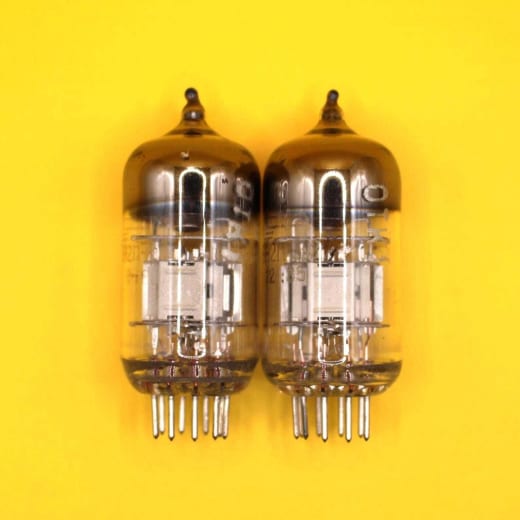


A Soviet tube usually arrives covered in stamps: a Cyrillic type code, a factory logo, a date, an «ОТК» in a crooked ink oval, sometimes a diamond with a number inside. None of it is decoration. Together the marks record what the tube is, where and when it was made, which inspector passed it — and sometimes which military officer signed for the batch.
The system behind the stamps is simple once decoded — but a surprising share of what gets repeated about them is wrong. This guide collects the whole thing in one place.
The short version: the printed code (6П14П-ЕВ) is the tube type, readable element by element. The date is usually a Roman-numeral month with a two-digit year: V 79 = May 1979. ОТК plus a number is a factory inspector’s stamp — the number identifies the inspector, not a grade. A rhombus means military acceptance; its number is the officer’s ID, also not a grade. And the letters after the hyphen (-В, -Е, -ЕВ, -Д) grade durability, not “military” status.
The rest unpacks each mark, with photos.
The anatomy of a marking
A well-preserved tube often carries the full set at once. On the 6Н8С below (a 6SN7 equivalent, Novosibirsk, 1980), the type, date and factory logo are printed on the glass, and two ink stamps sit on the base: the ОТК oval and a rhombus with a digit.
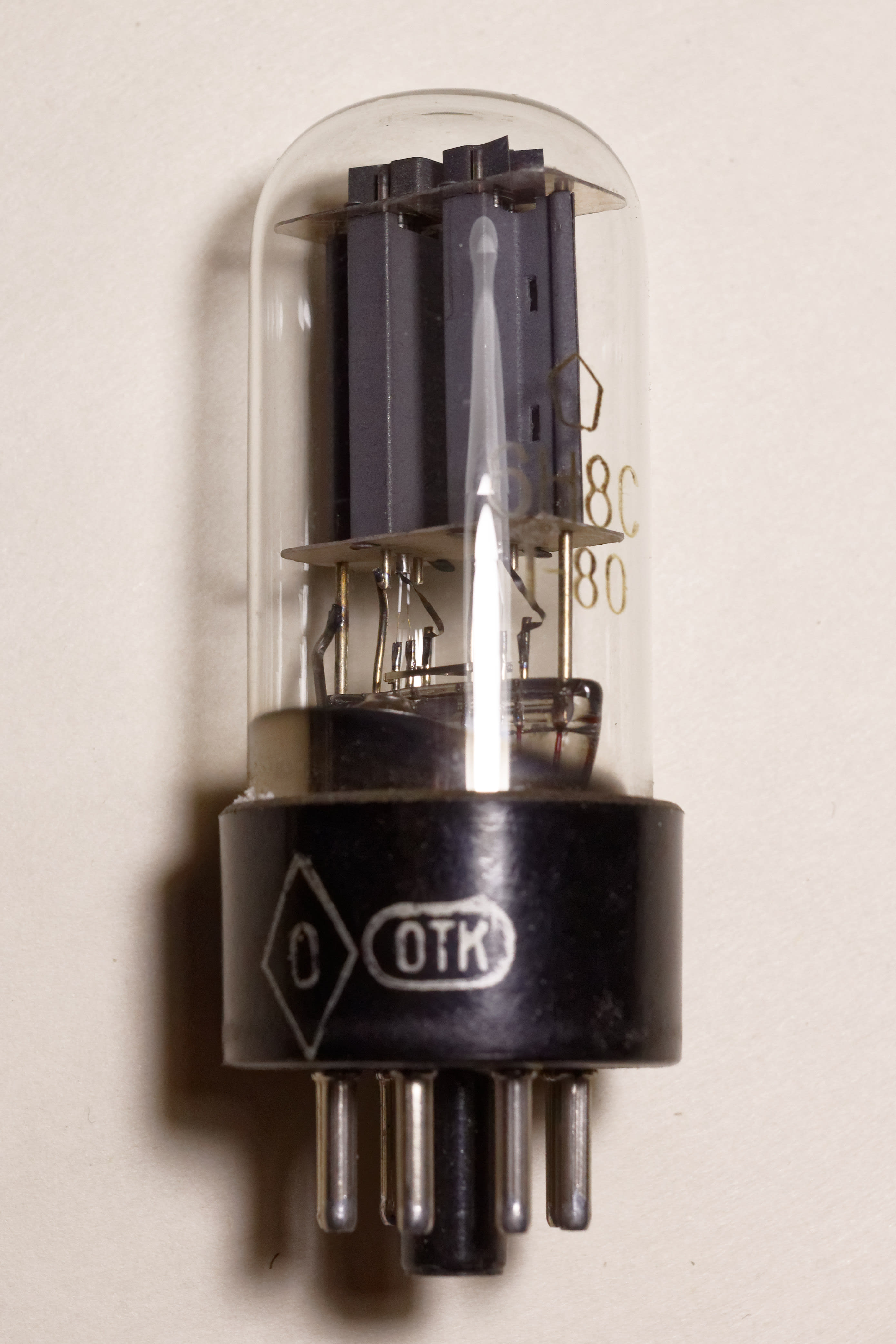
One tube, the whole system: type and date on the glass, factory logo, ОТК oval and military rhombus on the base. Photo: Retired electrician / Wikimedia Commons (CC0).
So a full reading of a tube goes: type → factory logo → date → acceptance stamps → suffix. The factory logos are a topic of their own — the guide to Soviet tube factories and logos covers those plant by plant. This article covers everything else.
How the type designation works
Since the early 1950s (GOST 5461, later GOST 13393-76), receiving and amplifying tubes follow one four-element scheme, with an optional suffix:
[heater voltage] [function letter] [design number] [envelope letter] – [quality suffix]
Take 6П14П-ЕВ, the Soviet EL84:
- 6 — heater voltage, rounded (6.3 V)
- П — output pentode or beam tetrode
- 14 — design number 14
- П — “finger” (пальчиковая) miniature glass envelope, 7 or 9 rigid pins
- -ЕВ — long-life and ruggedized version
Function letters
| Letter | Latin | Means |
|---|---|---|
| Д | D | single diode (including dampers) |
| Х | H/X | double diode |
| Ц | C/Ts | rectifier diode (kenotron) |
| С | S | triode |
| Н | N | double triode — 6Н2П, 6Н9С |
| Э | E | tetrode |
| П | P | output pentode / beam tetrode — 6П6С, 6П3С-Е |
| Ж | J/Zh | sharp-cutoff HF pentode — 6Ж1П, 1Ж29Б |
| К | K | remote-cutoff (vari-mu) HF pentode |
| Ф | F | triode-pentode — 6Ф3П |
| Г | G | diode-triode |
| Б | B | diode-pentode |
| А | A | frequency converter with two control grids |
| И | I | triode-hexode / triode-heptode |
| Е | E/Ye | electron-beam tuning indicator (“magic eye”) — 6Е5С |
| В | V | secondary-emission tube |
| Л | L | beam-deflection tube |
| Р | R | double output tetrode/pentode |
A few letters are pub-quiz material: М was used exactly once (12М1М, a small dual pentode), Т exactly once (1Т1А, a cold-cathode thyratron) — and the USSR never manufactured an octode at all.
There is also one famous exception every decoder trips over: 6Ф6С should read “triode-pentode” under this table, but it is a plain pentode. The name was grandfathered from the American 6F6 back when Soviet plants copied RCA types letter for letter — the same wave that turned the 6L6 into the 6П3С. During Lend-Lease the conversions were literal, Cyrillic letter for Latin letter: the American 6AJ5 became 6АЖ5.
Envelope letters
The letter at the end describes the bottle, not the electronics:
| Letter | Means |
|---|---|
| (none) | metal envelope, octal (6Ж4, 6П3 early production) |
| С | glass, over 22.5 mm diameter, usually octal (“С” for стеклянная — glass) |
| П | ”finger” miniature glass, 7 or 9 rigid pins |
| Б | subminiature glass 8–10.2 mm, flexible wire leads — 6С7Б-В, 1Ж24Б |
| А | subminiature glass 5–8 mm, flexible leads |
| Г | subminiature glass over 10.2 mm, flexible leads |
| Р | subminiature under 5 mm (used once: 1Ж25Р) |
| Ж | ”acorn” type with radial pins |
| Л | loctal base |
| Д | metal-glass with disc seals (UHF “lighthouse” tubes) |
| К | ceramic |
| Н | nuvistor |
One era trap for collectors of very old stock: in 1940s literature the final Б meant a metal shield jacket over the bulb (6Ж7Б), not a subminiature — the letter was reassigned when the wire-lead subminiatures arrived. A prewar tube and a cold-war tube can wear the same letter for different reasons.
One tube, many spellings
Western dealers transliterate the Cyrillic differently, which is why the same tube appears as 6Ж1П, 6Zh1P and 6J1P — or as 6N2P-EV and 6N2P-EB (Cyrillic В maps to Latin V but looks like B). These are not different versions, just three romanizations of one name.
Older stock uses older grammar. Before the 1950s, tubes carried 1929-style names — purpose and cathode letters plus a number, like СО-124 (“special, oxide cathode, design 124”). The modern system was drafted in 1940 but frozen by the war, so old, new and Americanized names shipped side by side for a decade.
How to read the date codes
For most Soviet tubes the rule is disarmingly simple, which has not stopped decades of confusion.
Classic format (1940s–1970s): Roman-numeral month + two-digit year. V 79 is May 1979. IX 74 is September 1974. XII-62 is December 1962 — as on this pair of 6П6С in original boxes. The Roman numeral is what throws people: “IV-83” looks like some mysterious type code until you read it as April 1983.
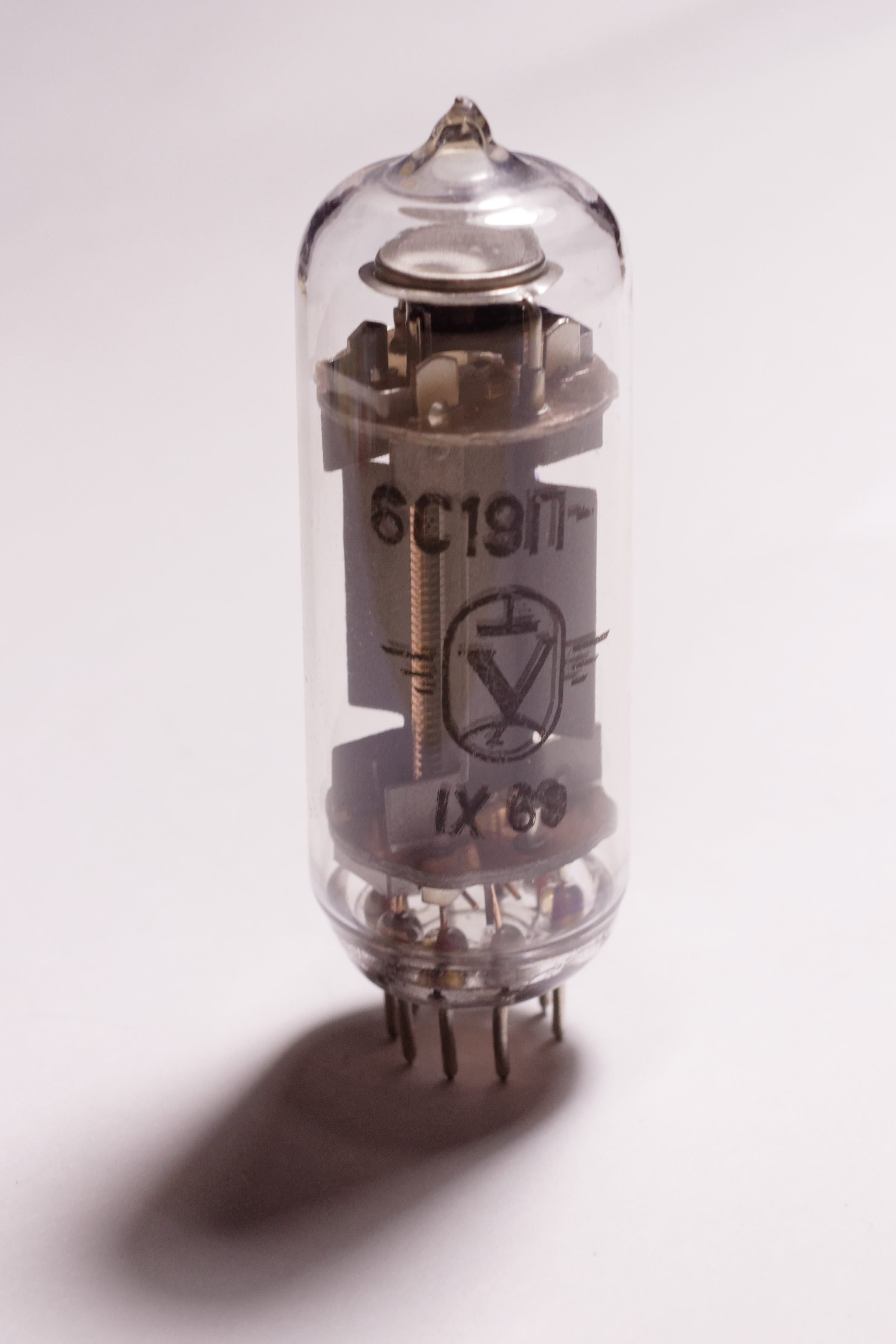
The textbook case: 6С19П, the winged Ulyanovsk plant logo, and IX 69 — September 1969. Photo: Retired electrician / Wikimedia Commons (CC0).
The convention goes back a long way — even wartime tubes read the same. A famously hard-to-identify octal from an old radiogram turned out to carry the faded stamp «6Л6-С (IX-41)»: a September 1941 glass copy of the American 6L6, made briefly before the 6П3С replaced it.

The same convention on a 1950 metal tube: 6А8 with V-50 — May 1950. Photo: 155LA3 (Soviet tube museum) / Wikimedia Commons (CC BY 4.0).
Later format (roughly 1970s onward): four digits — and here the real tubes disagree with the paperwork. The 1983 marking standard (GOST 25486-82) prescribed year-then-month, so 9009 reads September 1990. But plenty of tubes are stamped month-then-year: the Saratov 6П3С-Е below reads 0785, meaning July 1985. The practical rule: whichever pair cannot be a month is the year. On these 6С19П-В triodes the code 11 92 is November 1992 — the convention outlived the USSR itself.
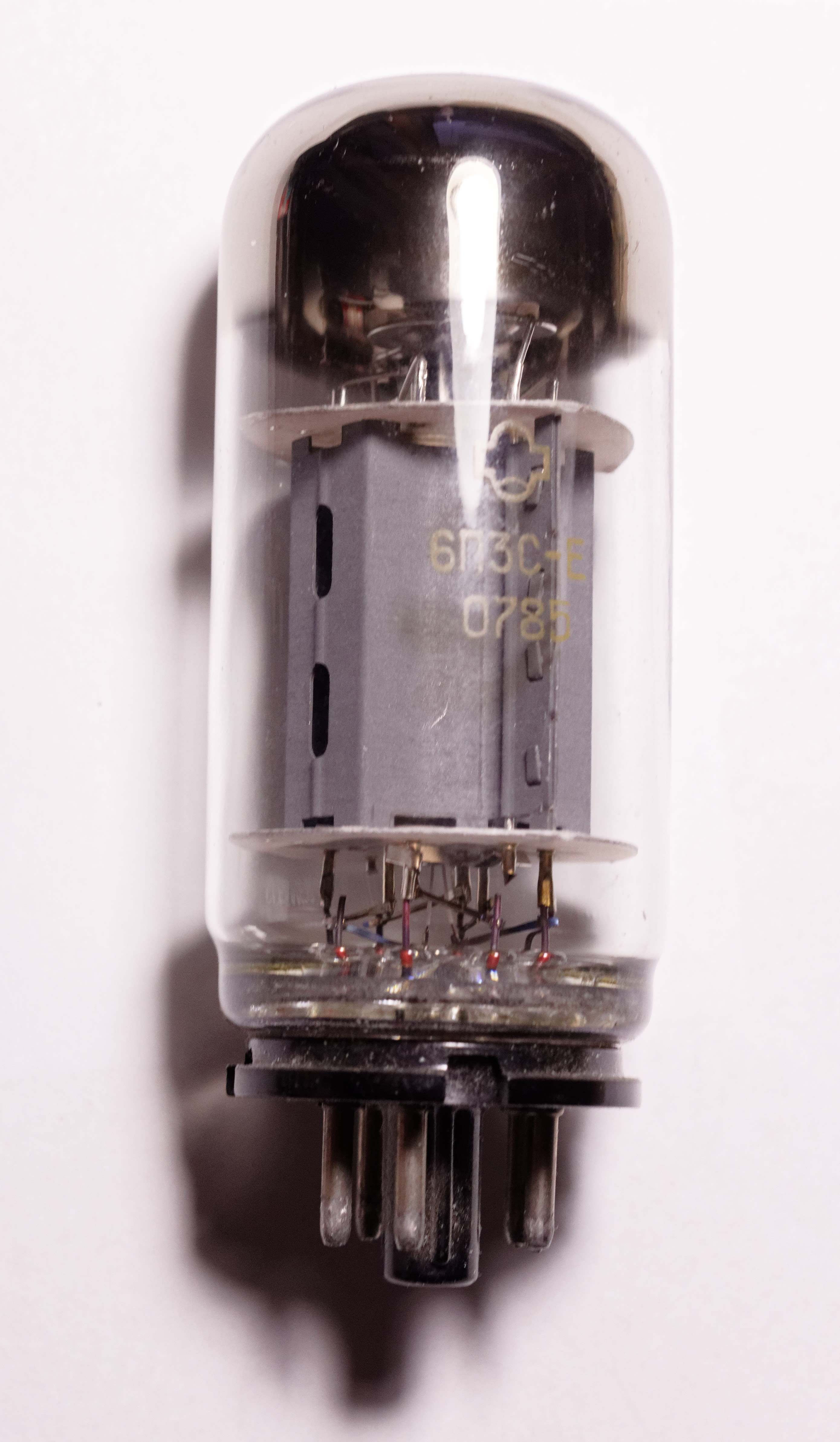
Late-era numeric dating: 6П3С-Е, Reflector (Saratov) logo, 0785 — July 1985. Photo: Retired electrician / Wikimedia Commons (CC0).
The same 1983 standard added compact letter codes for parts too small for full dates (R = 1983, S = 1984 … A = 1990; months 1–9, then О, N, D). These are common on Soviet transistors and capacitors, occasionally on late tubes. Before 1983 there was no letter-date system on tubes — if a 1960s tube seems to carry one, it is most likely an inspector or batch stamp.
Two dates on one tube is not an error. Long-stored stock was retested before shipment, and the retest got its own stamp: a tube stamped 74 on the glass with a separate 75 ink mark was made in 1974 and re-checked in 1975.
What does “ОТК” mean?
ОТК stands for отдел технического контроля — the department of technical control, the factory’s own quality-control office. Every Soviet factory making anything, from tubes to tractors, had one. The stamp — usually a rubber-stamped ink oval or ring, often askew, in a different color from the printed marking — means an inspector checked the item or the batch and passed it.
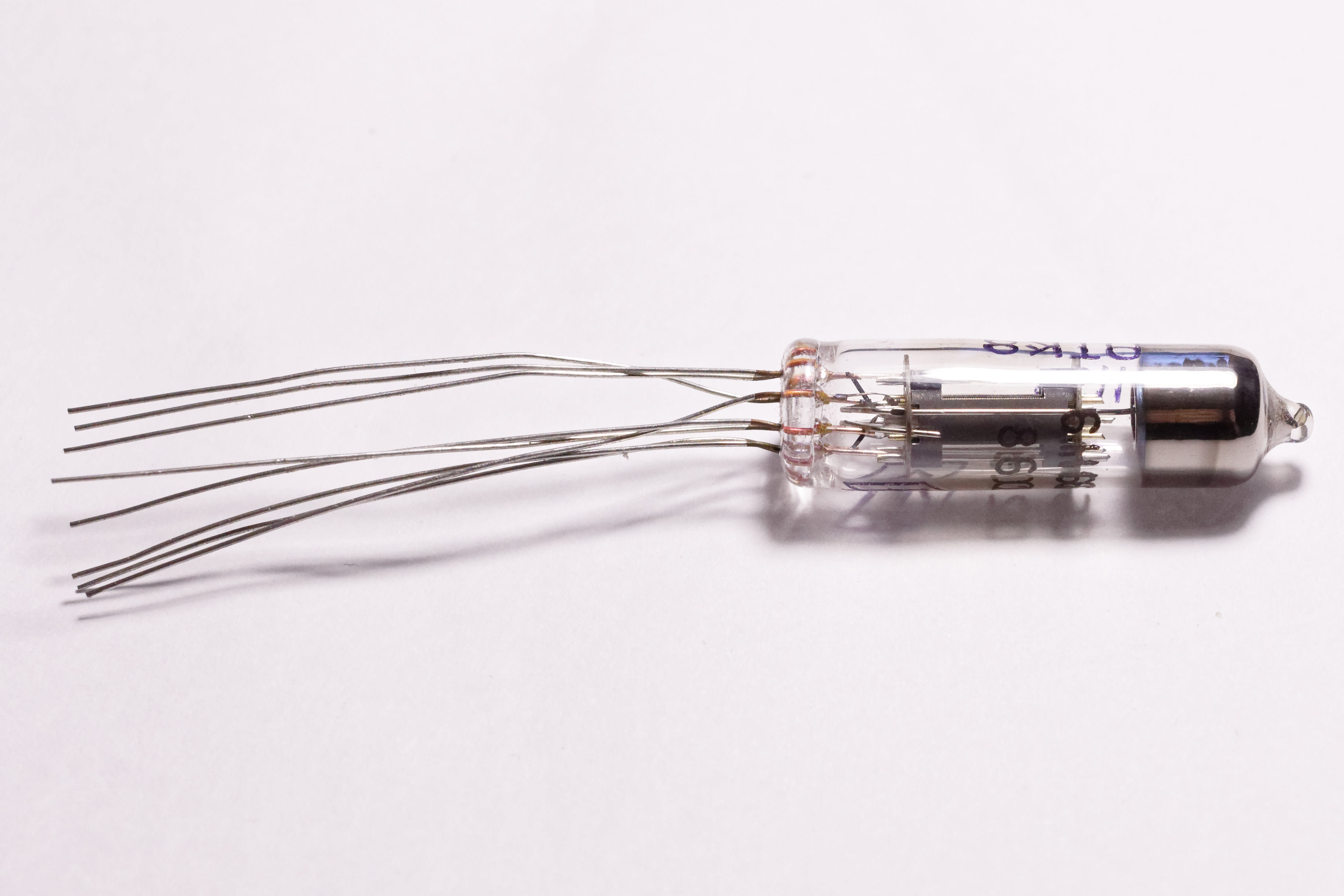
ОТК ink stamp directly on the glass of a subminiature 6Н16Б-В, Orel plant, 1986. Photo: Retired electrician / Wikimedia Commons (CC0).
I often see the claim that the number after ОТК is a quality rating, “from 1 (lowest) to 5 (highest).” It is not. The number identifies the inspector — ОТК2 and ОТК27 tubes from the same plant differ in who checked them, nothing more. Quality grades went on bulk packaging and documents, never into the inspector’s personal stamp. The other geometric ink marks — rectangles, triangles, pentagons with numbers — are the same idea, civilian QC marks from different control stages.
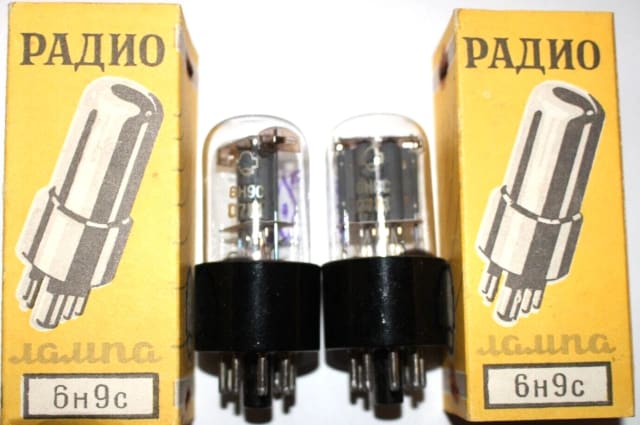
The stamp appears on the glass, on the base, on the box, or on several at once. The yellow РАДИОЛАМПА cartons that Soviet octals shipped in usually carry the type, the date, and the ОТК stamp on the box itself — these 6Н9С in original boxes are a typical example, and the same stamps turn up on everything from subminiature triodes to IN-18 Nixie tubes.
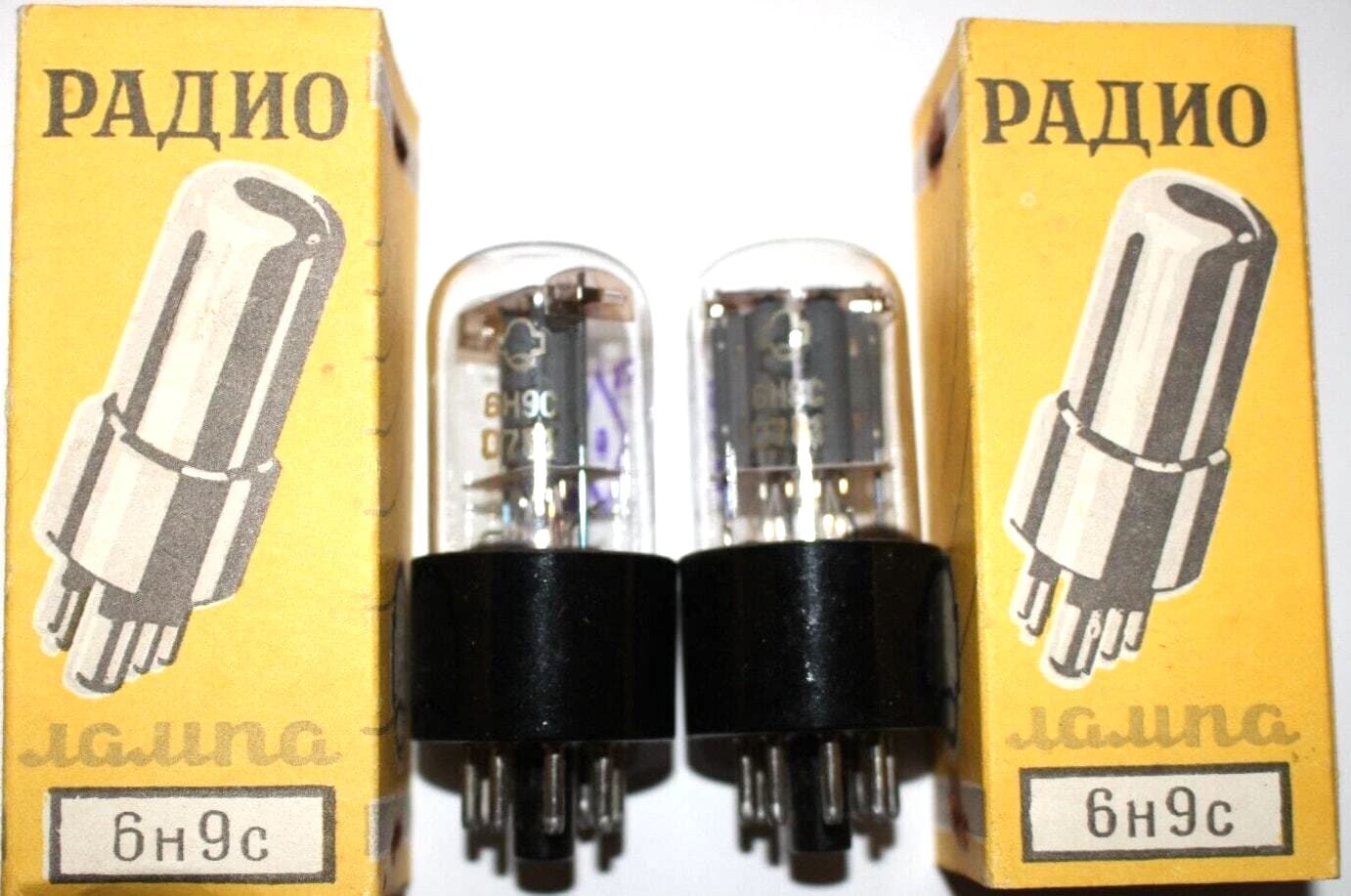
Original РАДИОЛАМПА cartons: the type is printed in a window on the lid, and dates and ОТК stamps typically go on the box as well as the tube.
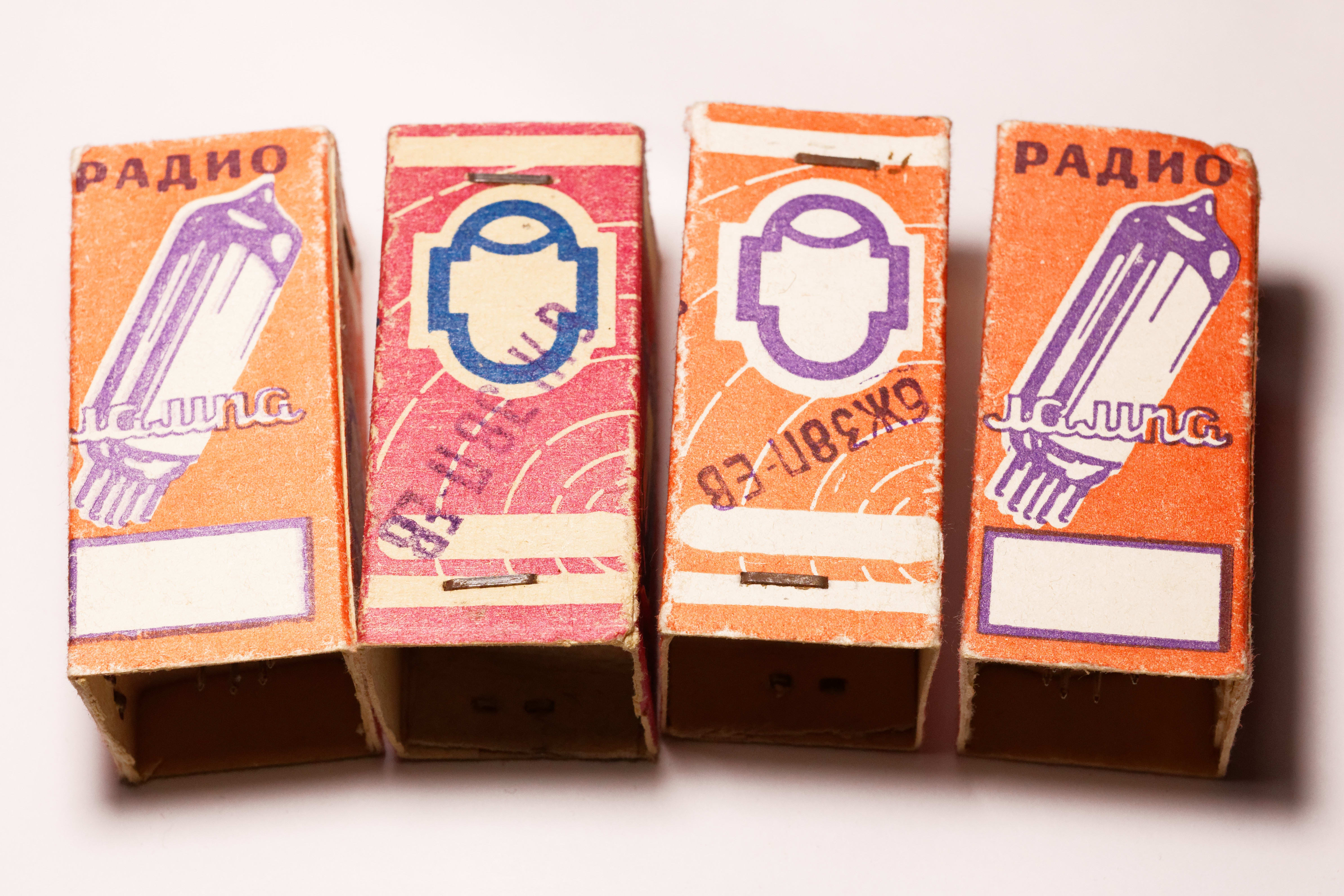
Generic factory boxes were rubber-stamped with the specific type — here 6Ж38П-ЕВ over the printed Reflector artwork. Photo: Retired electrician / Wikimedia Commons (CC0).
What does the rhombus (diamond) mean?
The rhombus is the mark buyers ask about most, and the one with the best story. It means the batch was accepted not by the factory’s own ОТК but by военная приёмка — “military acceptance.” A voenpred (военпред, military representative) was an officer stationed at the plant by the military customer, running his own acceptance to Ministry of Defense specs with more tests and stricter screening than civilian ОТК. For these batches the factory answered to its customer’s officer, not to itself.
The number or letter inside the rhombus is that officer’s personal ID — it has nothing to do with an acceptance grade. Large plants had several voenpreds, each with a number; where a single officer covered the whole plant, the rhombus could contain a zero or nothing at all.
I keep running into a table claiming the digit encodes the acceptance level: “5 = military, 6 = naval, 8 = aviation, 9 = space.” Those categories existed, but as specification classes on paperwork, not as the digit in the rhombus. And the version where a rhombus signals precious-metal content is pure folklore.
The mark itself evolved: until the mid-to-late 1960s military-accepted parts carried a star; then a rhombus with the letters ВП inside; from the mid-1970s, the familiar plain rhombus with a digit. A simple letter В ink stamp on a tube or box is the same institution — the voenpred’s acceptance mark on a lot.
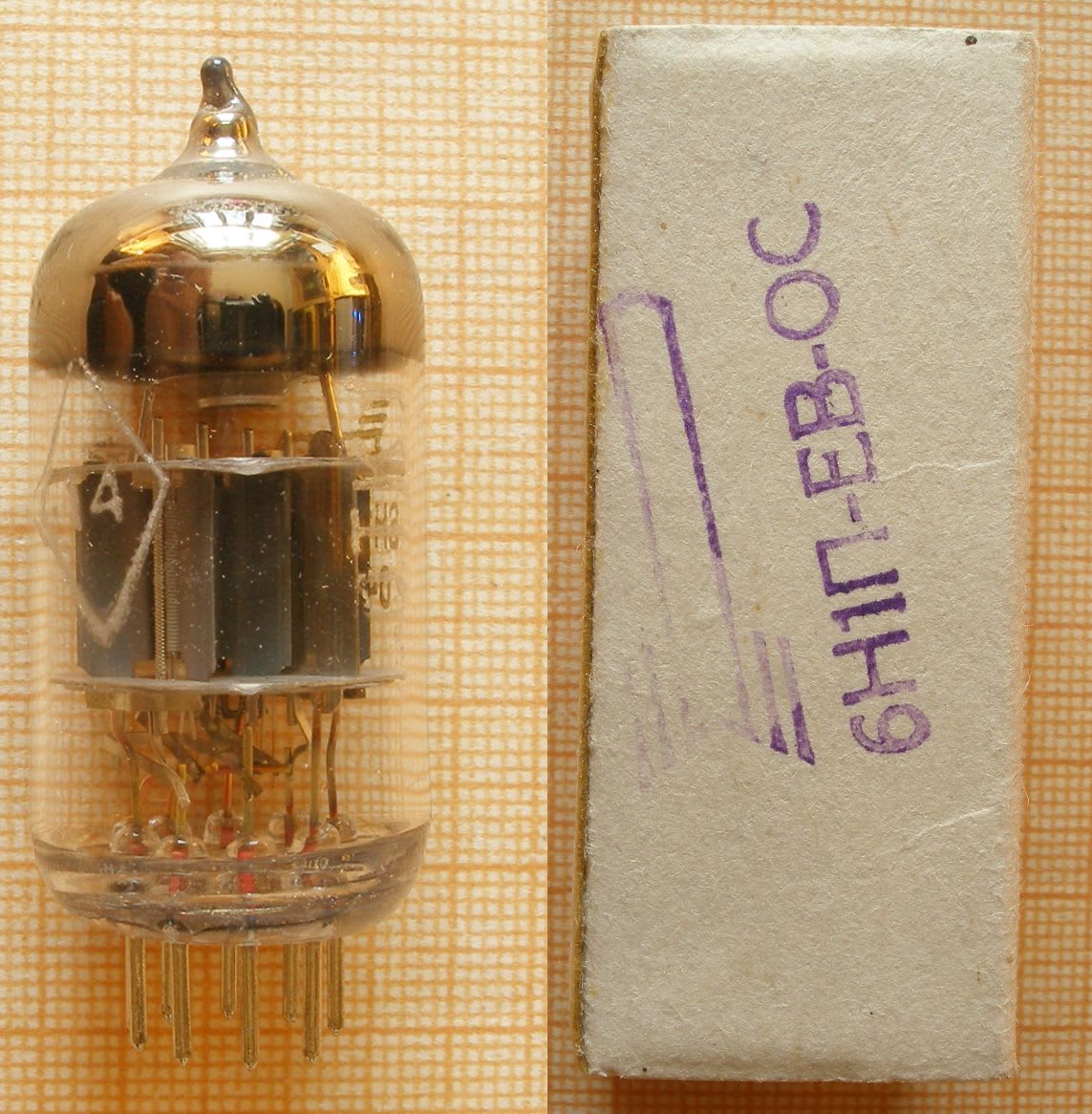
A 6Н1П-ЕВ-ОС with an etched diamond on the glass, next to its box stamped by the Voskhod plant in Kaluga. Photo: ScAvenger / Wikimedia Commons, CC BY-SA 4.0.
Two lookalikes cause regular confusion. The Saratov “Reflector” factory logo is itself roughly diamond-shaped, so the two often get conflated — but the acceptance rhombus and the factory logo are unrelated marks. Pentagons are the other trap: the Novosibirsk (NEVZ) factory logo is a hollow pentagon, while the State Quality Mark (Знак качества, awarded from 1967 and worth a 10% price premium to the factory) is a pentagon around a rotated К, usually with СССР across the top. Same shape, different institutions.
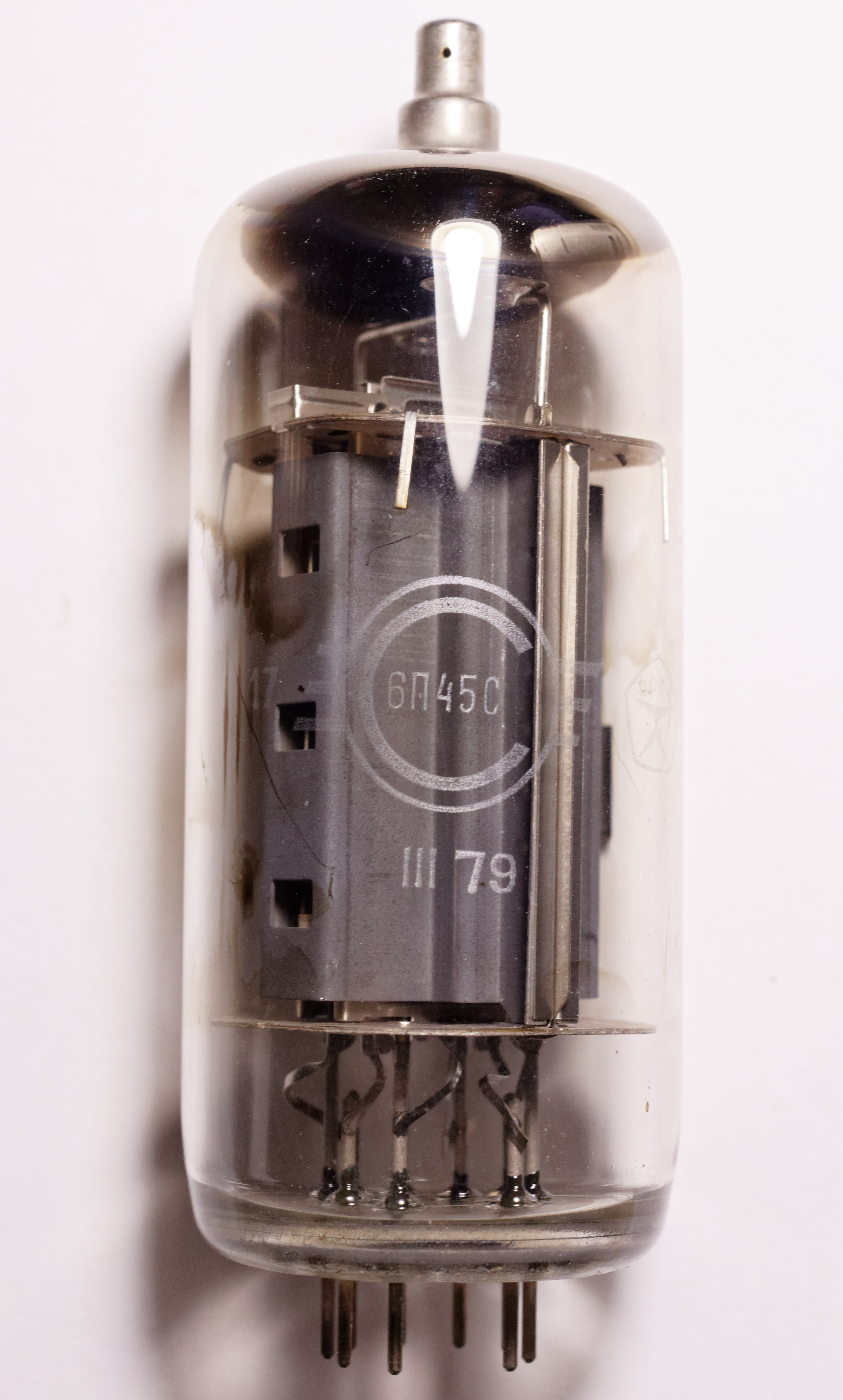
Three marks in one frame: Svetlana’s С-in-circle logo around the type, III 79 (March 1979), and the faint State Quality Mark pentagon at right. Photo: Retired electrician / Wikimedia Commons (CC0).
One more circle to close: a Э in a circle means the tube was accepted for export (экспорт), usually with slightly tighter screening. It is sometimes feared to mean “reject” — it means roughly the opposite. Export runs also got Latin-lettered boxes reading “MADE IN USSR.”
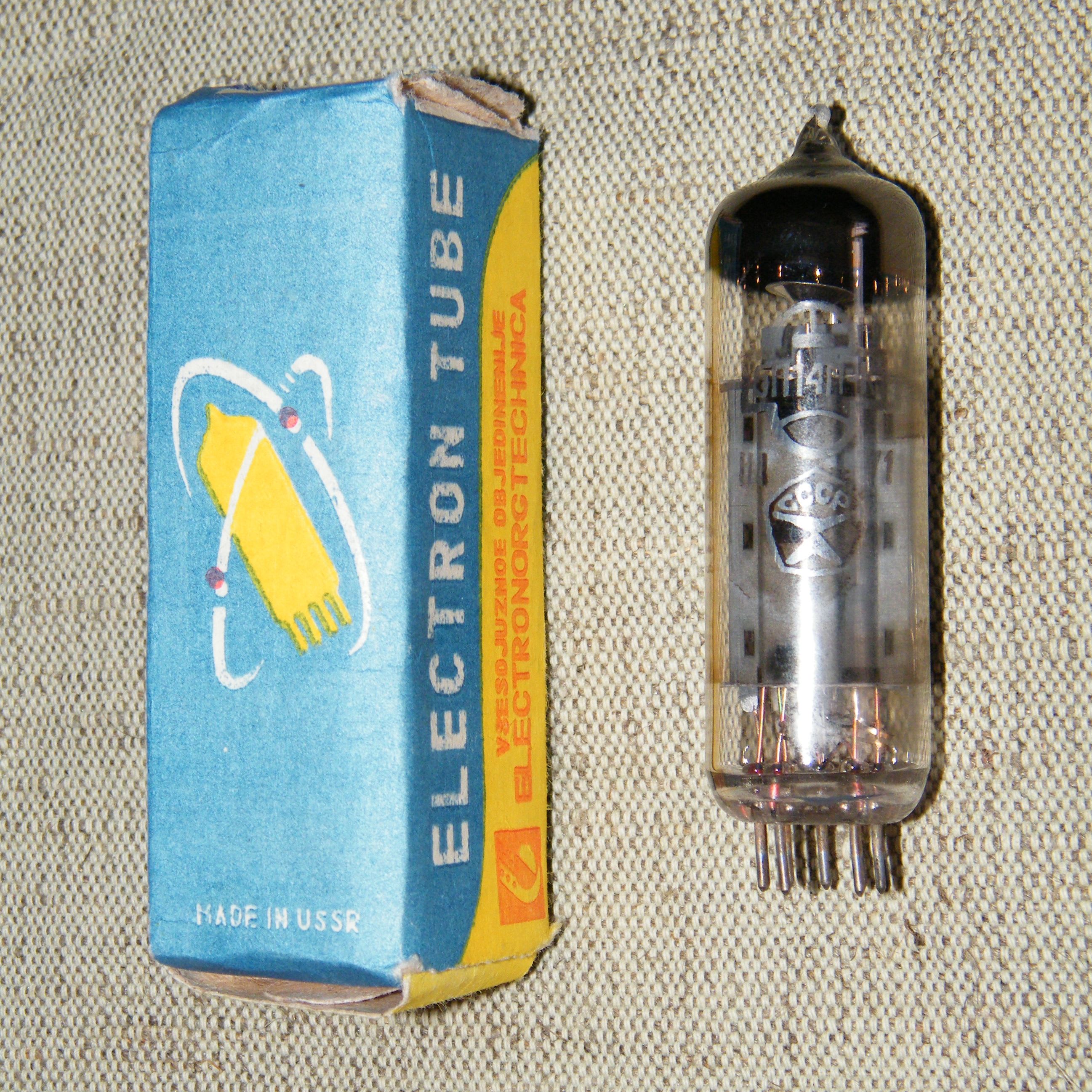
The export face of the same industry: a 6П14П with an English-language “MADE IN USSR” box. Photo: Andshel / Wikimedia Commons, CC BY-SA 3.0.
What do -В, -Е, -ЕВ and the other suffixes mean?
The letters after the hyphen are formal reliability grades from the Soviet specification system, applied only to receiving-amplifying tubes:
| Suffix | Latin | Means |
|---|---|---|
| -В | -V | increased reliability and mechanical ruggedness — 6С19П-В, 6С7Б-В |
| -Р | -R | higher grade than -В |
| -Е | -E | extended service life, rated 5,000+ hours — 6П3С-Е, 6Н3П-Е |
| -Д | -D | exceptionally long life, rated 10,000+ hours |
| -И | -I | rated for pulse operation |
| -К | -K | vibration-resistant |
| -ЕВ | -EV | combined: long-life and ruggedized — 6П14П-ЕВ, 6Н2П-ЕВ, 6Н1П-ЕВ |
I see “-EV = military spec” in dealer listings all the time, so it is worth stating plainly: -ЕВ does not mean “military.” It is a durability grade — long life plus mechanical strength. A tube became military by passing military acceptance (the rhombus), which is a separate fact: an ordinary 6Н2П could be military-accepted, and a 6Н2П-ЕВ could ship to a television factory. The suffixes made these tubes attractive to the military, which is how the confusion started. Likewise “-В means low noise” is an audio-community reading; the Soviet wording is reliability and mechanical strength.
The suffixes are very real in the hardware, though: ruggedized versions got reinforced micas and cathode structures — visible, for example, in the triple-mica construction of the 6Н2П-ЕВ — and gold-grid variants appear in military subminiatures like the 6Н16Б-ВИ.
Why “same date codes” matter for pairs (and what they don’t prove)
You will meet the phrase same date in nearly every Soviet NOS listing — same-date quads, same-date pairs, even same-date Nixie sets. The reasoning is sound: tubes from the same month at the same plant came off the same tooling and the same material batches. They are more likely to measure alike — and, just as important for amplifiers, to age alike.
How much it guarantees depends on the type. For some tubes a shared date really does deliver almost identical parameters — same-date examples routinely measure within a hair of each other. Other types spread noticeably even within one production run, so two tubes from the same day can still differ. In short: same date always improves the odds, for some types dramatically — but the only way to call a pair matched is to measure it, as covered in what “tested on L3-3” actually means.
Date codes also drive collector pricing: whole vintages become sought-after (1970s Reflector 6Н23П variants are the famous case), so a 1975 stamp can put otherwise similar glass in a different price class than a 1985 one.
Markings as a fake detector
There is a final reason to care about all this ink: intact Soviet markings are an authenticity fingerprint. In the Cold War tube trade the traffic ran in a surprising direction — cheap Soviet tubes dressed up as expensive Western ones. Documented cases include Svetlana 5У4Г rectifiers restamped as RCA in “Made in West Germany” boxes, and Saratov 6V6 relabeled as Italian CEI with a false “Made in Holland” origin. The first step of every such fake was removing the original marking.
Hence the checks:
- Ghost markings. A suspiciously clean patch where a marking should be, or traces of a second designation under the paint, means the tube was washed and restamped. A type number obliterated by grinding or etching is disqualifying.
- Ink that is too fresh. Soviet stamps are 40–80 years old, and the classic glass-print rubs off with alcohol — which is why markings should never be “cleaned,” and why crisp complete print on NOS tubes is prized. Glossy, solvent-proof paint on allegedly 1960s glass deserves suspicion.
- Dates that disagree. A date newer than the packaging style around it, or a Western brand on glass whose getter and micas say Saratov, is a re-mark. The construction never lies; the factory logos guide helps put a plant name to the internals.
The modern twist is legal rather than fraudulent: since the 1990s, Saratov production has shipped as Sovtek, Electro-Harmonix, Tung-Sol, Mullard and Genalex reissues, and for years the “Svetlana” name sat on Saratov tubes while the real St. Petersburg Svetlana sold as “SED” under its winged-С logo. Printed brand and factory of origin have been drifting apart for thirty years — one more reason the Soviet marking system, which never hid the plant, the date or the inspector, is the version collectors trust.
Honest caveats
- The month-vs-year order in four-digit codes genuinely varied. When both pairs read 12 or less (say, 0507), the code alone cannot settle it — box dates or the variant’s known production years have to help.
- Some marks remain unexplained — colored dots on the dome of some octals are the classic example. Explanations exist (selection ticks, internal QC passes), but none documented; treat any confident answer with suspicion.
- Why months were Roman numerals is not recorded anywhere accessible — it was simply the Soviet industrial date convention of the era, shared with cameras and watches.
- The rhombus chronology (star → ВП-in-rhombus → digit-in-rhombus) is reconstructed from surviving hardware; the exact transition years are uncertain.
- Wartime production is thinly documented, and much of what is written about 1940s Soviet tubes is guesswork.
Bottom line
Soviet tube markings are a small bureaucratic language, and it is entirely learnable: type designation by GOST, Roman-numeral or four-digit date, factory logo, ОТК stamp with an inspector’s number, rhombus for military acceptance with an officer’s number, suffix for reliability grade. Two rules cover most of the confusion — the numbers in the stamps identify people, not quality grades, and the suffixes describe durability, not military status.
And the marks are worth protecting. They survive as the tube’s original paperwork, printed on the product itself: who made it, when, and who signed for it. Handle NOS tubes by the base, keep solvents away from the print, and the record stays readable for the next owner too.
Thank you for reading!
References used:
- Маркировка радиоламп — openwiki.arbat.name
- Радиолампы производства СССР и России — Russian Wikipedia
- Система обозначений отечественных радиоламп — qrx.narod.ru
- Маркировка отечественных радиоламп (1950 textbook transcription) — tubesound-ru.livejournal.com
- «Что такое приёмка 0?» — rt20.getbb.ru collector thread on the rhombus and voenpred numbers
- Чем радиодетали советской военной приёмки отличались от других — back-in-ussr.com
- ГОСТ 25486-82: date-of-manufacture letter codes
- Советские радиолампы времён ВОВ — Valery Gromov’s radio museum thread, forum.qrz.ru
- Russian tube designations — English Wikipedia
- State quality mark of the USSR — English Wikipedia
- How to read Russian date codes — diyAudio
- Russian tube markings — diyAudio
- Russian tubes: classification of various brands — diyAudio
- Deciphering Soviet tube suffix — tubemaze.info
- Fake tubes Hall of Shame — jacmusic.com
- Russian tube factories overview (1998) — ominous-valve.com
- Sovtek — English Wikipedia
- Svetlana brand dispute coverage — Stereophile