


Short answer: while these tubes do have a distinctive construction, most of the craze started with one specific review from 2015.
Full story: if you spend enough time with 6922 / E88CC tubes, you will probably come across these peculiar, noticeably expensive Soviet tubes. They are usually called “Holy Grail” tubes and are often presented as the pinnacle of what you can put in a hi-fi system. In practice, that name usually points to 1974-1975 6N23P SWGP tubes with silver shields: rare, good-looking, and praised in tube-rolling circles. But what makes them special, and why are they called the “Holy Grail”? Let’s find out.
What Makes the Construction Special
SWGP stands for single wire getter post. On these tubes, the getter assembly near the top of the tube is held by one bent wire support, and the silver-colored shield is visible between the darker plate structures. Those details do not create a separate electrical rating, but they do make this 1974-1975 Reflektor construction easy to identify in photos.
The construction is the useful part you can verify before buying. SWGP and silver shield are physical markers. They do not prove gain, noise, lifespan, or compatibility by themselves. For that, you still need the marked tube type, the test values, and the datasheet.
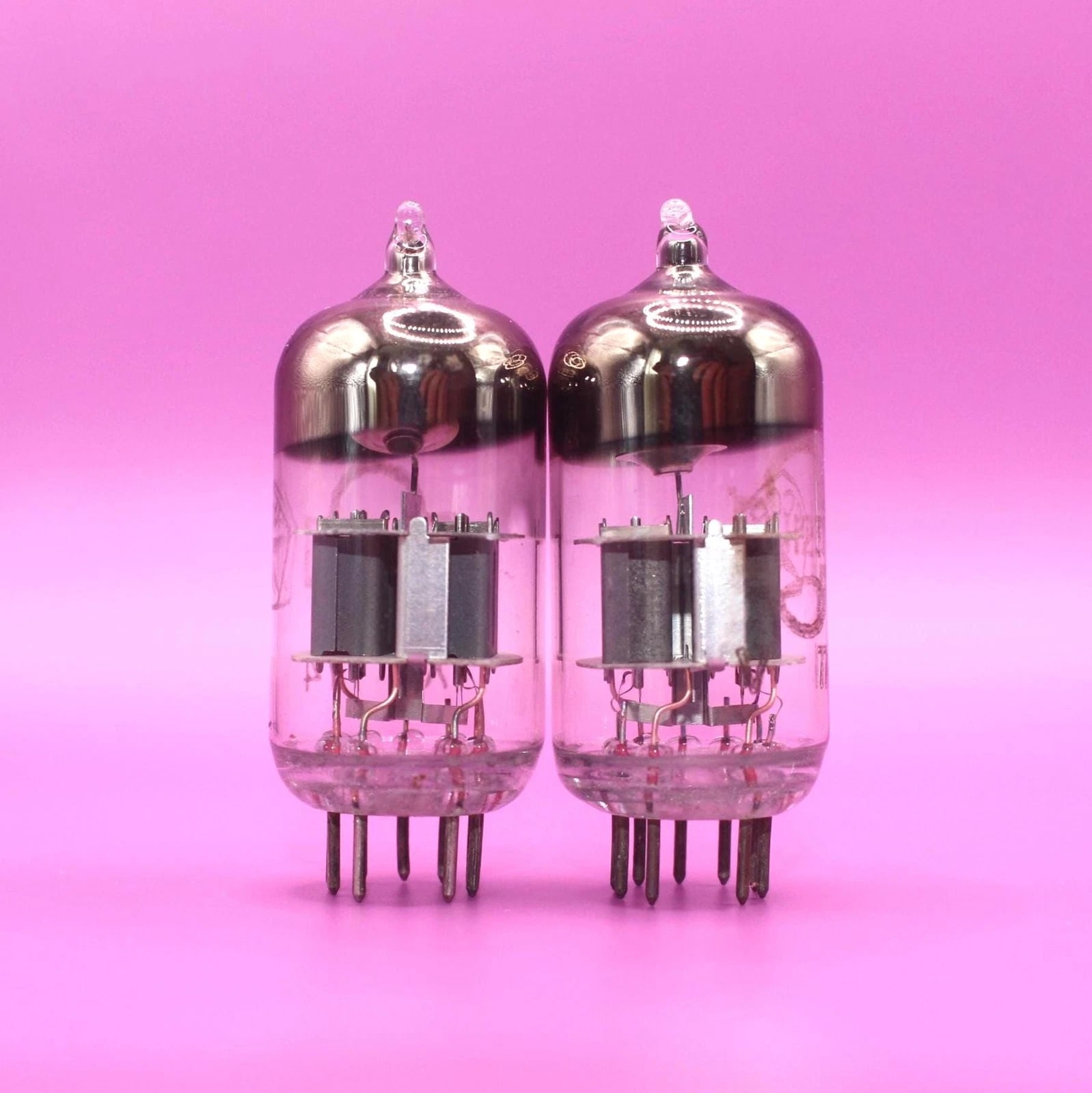
1974 Reflector 6N23P SWGP silver-shield tubes.
Where the Holy Grail Name Comes From
Now this is where things get interesting. Despite numerous listings with “Holy Grail” in the title, it was difficult to find a proper analysis or comparison of these tubes.
Most forum discussions I found were not explanations. They were people asking the same question: what is so special about these tubes? Only after a thorough check of different forum posts did I finally find what seems to be the origin of this tube’s modern popularity.
In 2015, Head-Fi forum member rb2013 published what he called the Grand Tube Review: a large comparison of 6922-family tubes, including 6N23P, E88CC, CCa, 7308, and E188CC types.
Grand is the right word here. The numbers are impressive: 17 tube models, a reviewer with more than 20 years of 6DJ8 / 6922 / 6N23P / E88CC tube-rolling history, and a serious system with a $6,500 DAC, $750 ICs, a Schiit Lyr headphone amp, Sennheiser HD800 headphones, and two speaker systems used as reference points.
So this review is from an experienced connoisseur who was seeking not simply good value for the money, but rather the best possible experience. He listened to 8 music tracks with each tube and ranked them across 10 different sound qualities, calculating the total as “Ave points.” It was a huge feat that took a week and 136 tube rolls.
And here is the final table of results:
| No. | Tube | Ave points |
|---|---|---|
| 1 | 1975 Reflektor 6N23P SWGP silver shield | 121.7 |
| 2 | Siemens CCa gray shield, 1963 | 117.8 |
| 3 | Siemens CCa gray shield, 1965 | 117.5 |
| 4 | Telefunken Ulm E188CC, 1960s | 117.3 |
| 5 | 1974 Reflektor 6N23P SWGP silver shield | 116.1 |
| 6 | Amperex 6922 D-getter pinched waist | 115.2 |
| 7 | Philips Miniwatt SQ E188CC, 1964 | 114.2 |
| 8 | Amperex USN-CEP 7308, 1965 | 113.7 |
| 9 | 1975 Voskhod 6N23P gray-shield SWGP | 111.3 |
| 10 | Amperex 7308 green print, 1968 | 109.1 |
| 11 | Siemens E88CC gray shield, 1960s | 107.6 |
| 12 | Telefunken Ulm E88CC, 1960s | 107.5 |
| 13 | 1965 Reflektor 6N23P dual straight-wire getter | 106.8 |
| 14 | Valvo Herleen E88CC, 1967 | 106.3 |
| 15 | 1966 NEVZ 6N1P-E | 105.3 |
| 16 | Siemens E88CC silver shield, 1970s | 100.0 |
| 17 | Mullard England CV2492, later flagged as fake | 94.6 |
The 1975 Reflektor SWGP ranked the best, better than Siemens CCa, Telefunken E188CC, Amperex 7308, and other expensive Western 6922-family tubes in the same comparison.
The review explains the reasons for that. The 1975 Reflektor finished first in 7 of the 10 sound categories. Main strengths are detail, clarity, speed, scale, soundstage, and musical flow. The 1974 Reflektor SWGP also ranked high, landing above the Amperex D-getter pinched waist, Philips Miniwatt E188CC, and both Amperex 7308 entries. The 1975 Voskhod SWGP did well too, but he described it as less open and less detailed than the top Reflektor tubes.
That is also where the nickname appears. After describing the 1975 Reflektor’s sound, the reviewer wrote: “What I a call my ‘HG’ or ‘Holy Grail’ tube. For me they are the tubes to measure all the others against.” Considering the reviewer’s 20+ years of experience and the depth of the analysis, it is not surprising that this review had such an impact and helped give the 1975 Reflektor SWGP silver-shield version its now-common name in listings and forum discussions.
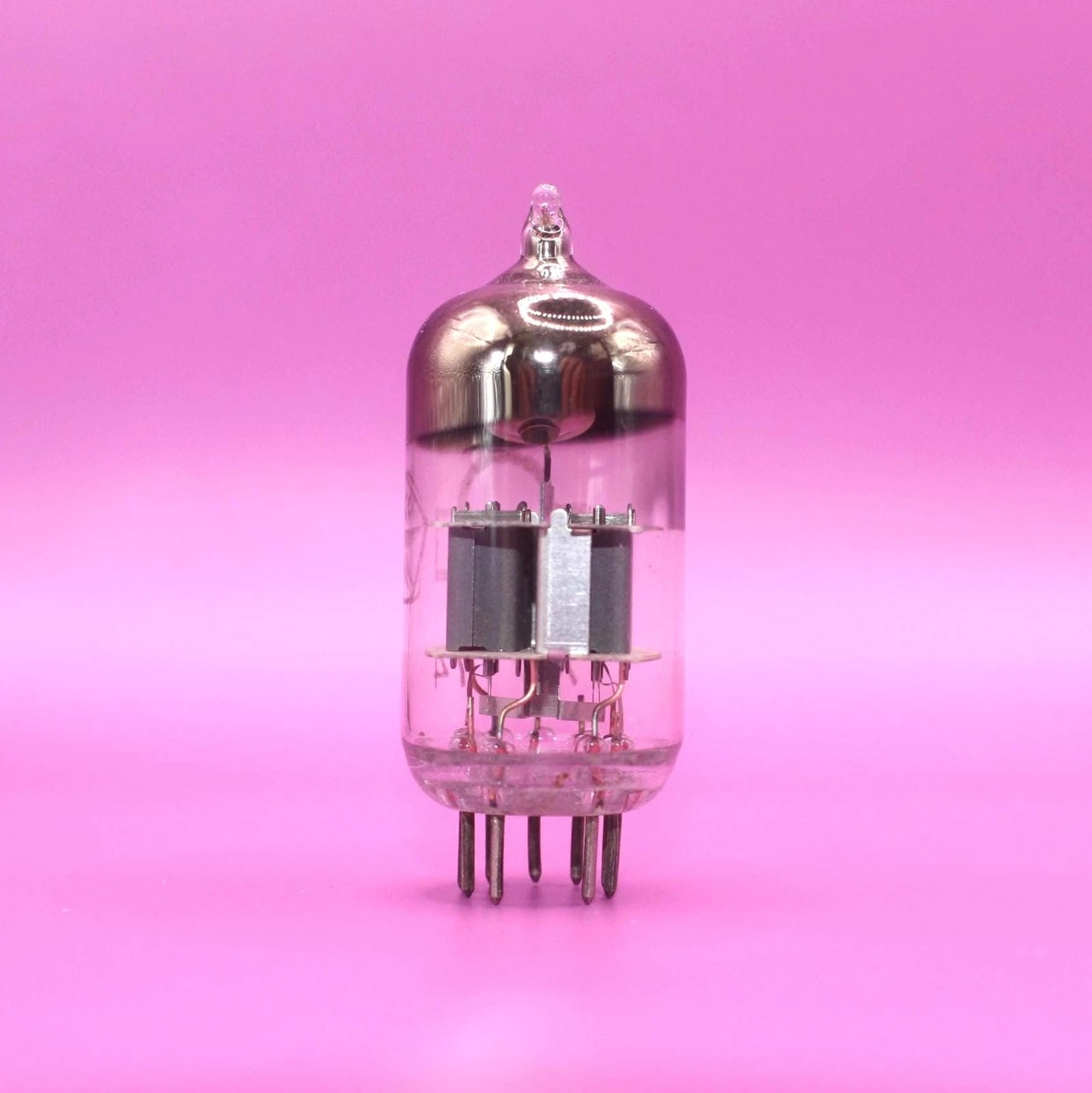
The silver-colored shield is visible between the plate structures.
Bottom Line
Reflektor SWGP silver-shield 6N23P tubes are recognizable, genuinely interesting tubes, and the 2015 Head-Fi review gives a clear reason why some listeners rate them so highly. Just like the Holy Grail itself, they are surrounded by stories, assumptions, and a bit of mythology, which is part of the fun for many audio enthusiasts. However, they are not for everyone.
If you are trying to maximize a serious 6922-family system and cost is secondary, this tube may be worth chasing. If you simply need a good tested tube, or if you do not care about small differences between dozens of variants, a standard 6N23P or 6N23P-EV may be the more practical choice.
Thank you for reading!
References used:
- Head-Fi 6922 / 6N23P tube review
- StereoNET classified quoting the Head-Fi ranking
- SoundEX Russian forum thread quoting the Head-Fi ranking
- Head-Fi classified using the same Holy Grail / SWGP wording
- Tubes.rs 1974 Voskhod SWGP listing and construction photos
- Tubestocks 1975 Reflector SWGP silver-shield listing
- Datagor article on 6N23P-EV durability and construction


