


Only 3 left
NEVZ / 6N6P
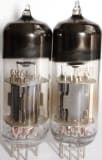
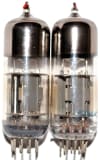
2x New 6N6P 6Н6П Matched Pair Same Date NOS Double Triode Nevz ~ECC99 ~E182CC
Low-frequency power amplification tubes with separate cathodes, tested on L3-3 and matched by date. Contains 0.008g gold per tube.
$8.903 in stock
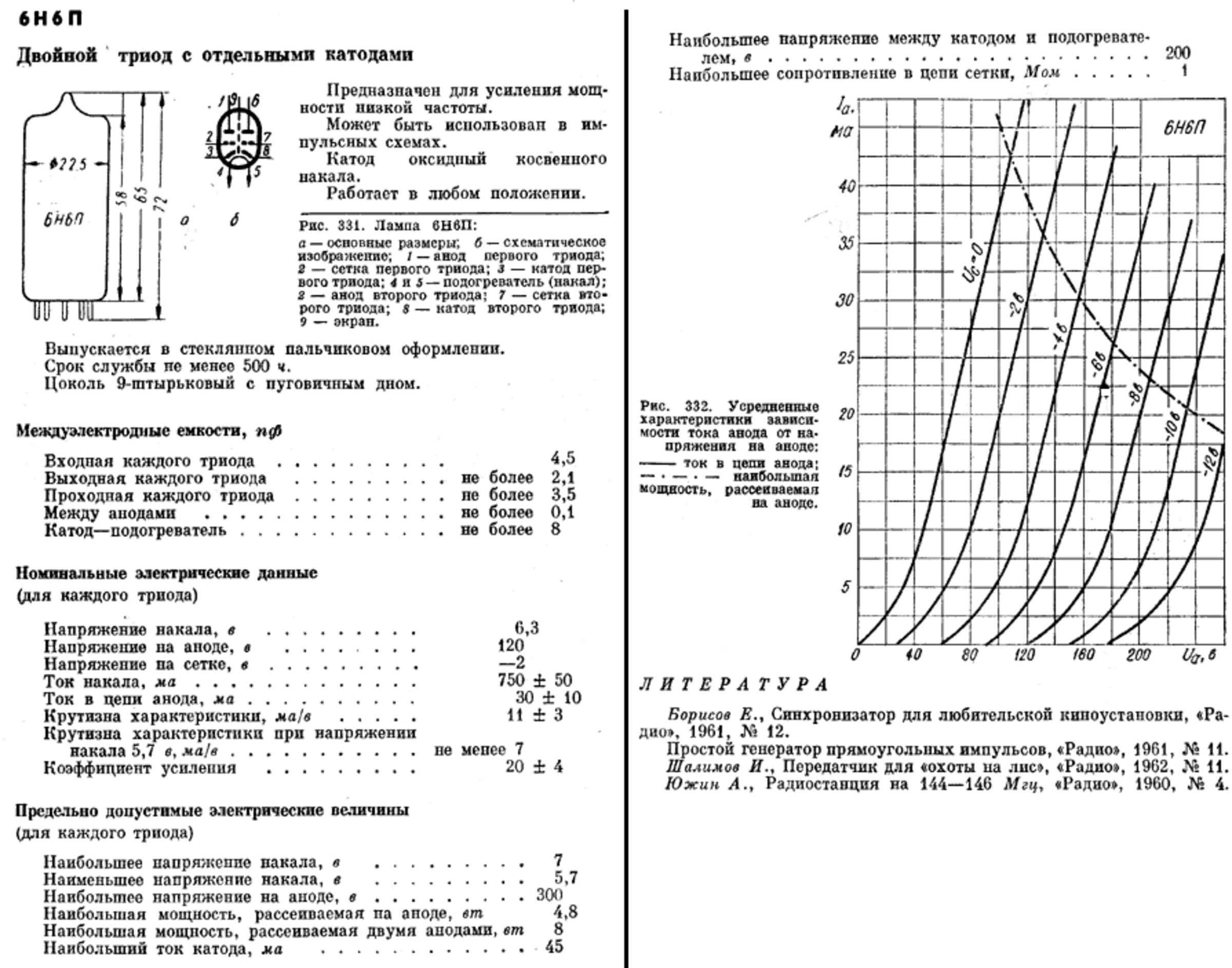

The 6N6P is a double triode with separate cathodes (двойной триод с отдельными катодами).
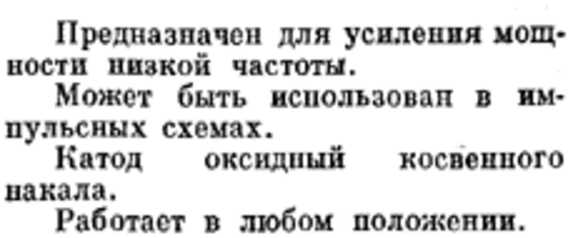
The handbook says it is intended for low-frequency power amplification (усиления мощности низкой частоты) and may be used in pulse circuits (в импульсных схемах). It has an oxide cathode, indirectly heated (катод оксидный косвенного накала), and works in any position.

It is made in a glass miniature envelope (стеклянном пальчиковом оформлении). The service life is at least 500 hours (ч). The base has 9 pins and a button bottom (пуговичным дном).
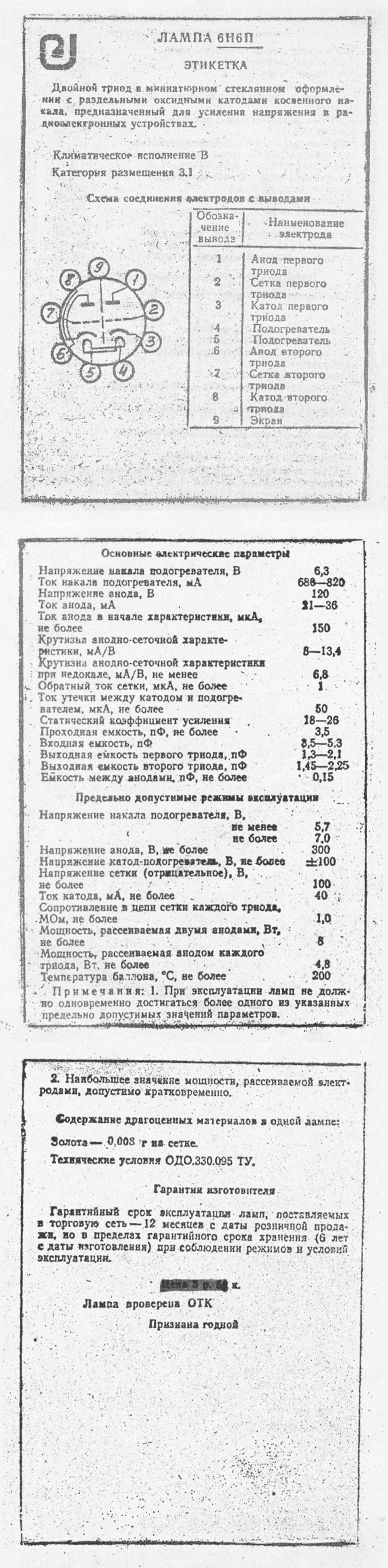
Page 1 is a handbook entry and page 2 the factory label (этикетка).
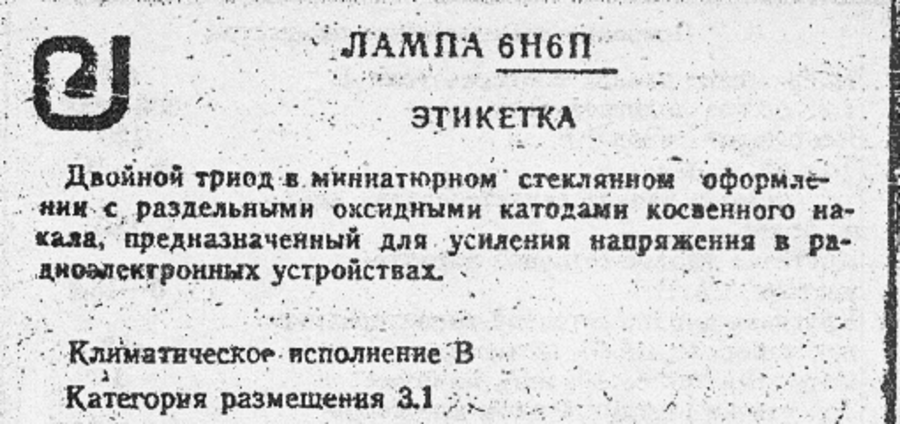
The label has a logo at the top left. It describes a double triode in a miniature glass envelope, with separate oxide cathodes (раздельными оксидными катодами), indirectly heated, intended for voltage amplification in radio-electronic devices (в радиоэлектронных устройствах). It gives climatic version (климатическое исполнение) В and placement category (категория размещения) 3.1.
The handbook names power amplification (усиления мощности); the label names voltage amplification (усиления напряжения).
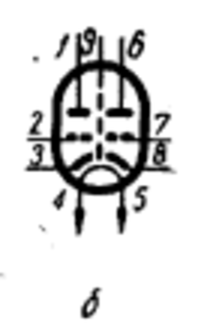
The envelope is drawn as an upright oval. Leads 1, 9 and 6 come out at the top. Leads 1 and 6 end in short horizontal bars in the upper half, one on each side, and lead 9 continues as a dashed line down the middle. On the left, lead 2 runs in to a dashed row across the middle and lead 3 to an arc below it; on the right, leads 7 and 8 do the same. Under the two arcs is a third arc, and leads 4 and 5 run down from its ends and out of the bottom, each ending in an arrowhead.
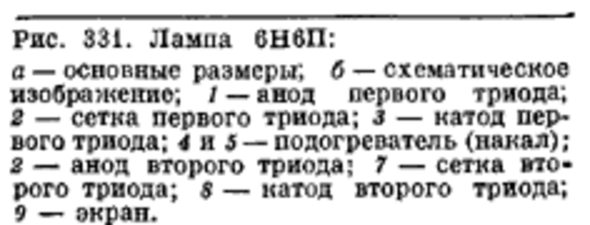
| Lead | Electrode | In the handbook |
|---|---|---|
| 1 | Anode, first triode | Анод первого триода |
| 2 | Grid, first triode | Сетка первого триода |
| 3 | Cathode, first triode | Катод первого триода |
| 4 and 5 | Heater | Подогреватель (накал) |
| 2 | Anode, second triode | Анод второго триода |
| 7 | Grid, second triode | Сетка второго триода |
| 8 | Cathode, second triode | Катод второго триода |
| 9 | Screen | Экран |
The caption has two entries numbered 2 and none numbered 6.
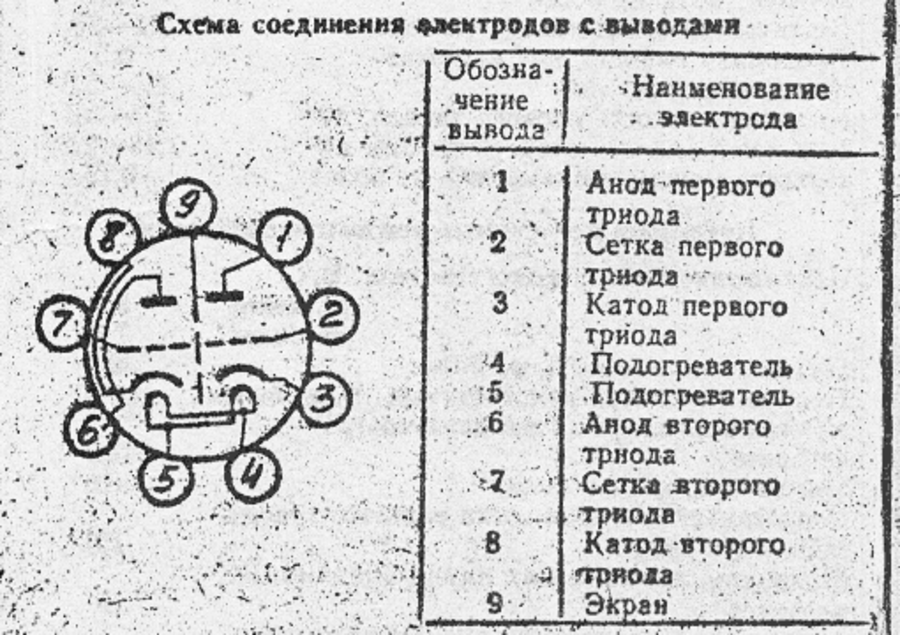
| Lead | Electrode | On the label |
|---|---|---|
| 1 | Anode, first triode | Анод первого триода |
| 2 | Grid, first triode | Сетка первого триода |
| 3 | Cathode, first triode | Катод первого триода |
| 4 | Heater | Подогреватель |
| 5 | Heater | Подогреватель |
| 6 | Anode, second triode | Анод второго триода |
| 7 | Grid, second triode | Сетка второго триода |
| 8 | Cathode, second triode | Катод второго триода |
| 9 | Screen | Экран |
The label gives lead 6 as the anode of the second triode; the handbook caption numbers that entry 2.
In the drawing, nine numbered circles sit around a larger circle: 9 at the top, then 1, 2, 3 and 4 down the right side, and 5, 6, 7 and 8 up the left side. A line runs down the middle from 9, solid in the upper half and dashed below. Two short bars sit in the upper half, one each side of it. A line joins the right bar to 1. On the left, two parallel lines curve down inside the rim, from just below 8 to a small tab beside 6; a line from the left bar runs up, turns left and becomes the inner of the two. A dashed line crosses the middle from 7 on the left to 2 on the right. Below it are two arcs, one each side of the middle line. The left arc runs into the lower end of the two parallel lines, and a line joins the right arc to 3. At the bottom, two small loops joined by a double line are linked to 5 and 4.

The outline prints a diameter of 22.5 (ф22.5) across the body and three heights on the right. 58 runs from the shoulder, where the body reaches full width below the tip, to the bottom of the glass. 65 runs from the top of the tip to the bottom of the glass, and 72 from the top of the tip to the ends of the pins. The type, 6Н6П, is lettered on the bulb, and short pins are drawn below it. The drawing prints no unit.
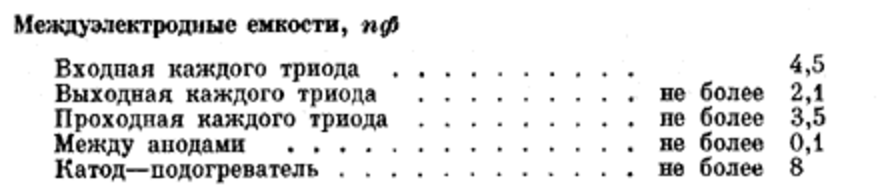
| Interelectrode capacitances, pF | Value |
|---|---|
| Input, each triode (входная каждого триода) | 4.5 |
| Output, each triode (выходная каждого триода) | ≤ 2.1 |
| Transfer, each triode (проходная каждого триода) | ≤ 3.5 |
| Between the anodes (между анодами) | ≤ 0.1 |
| Cathode — heater (катод — подогреватель) | ≤ 8 |
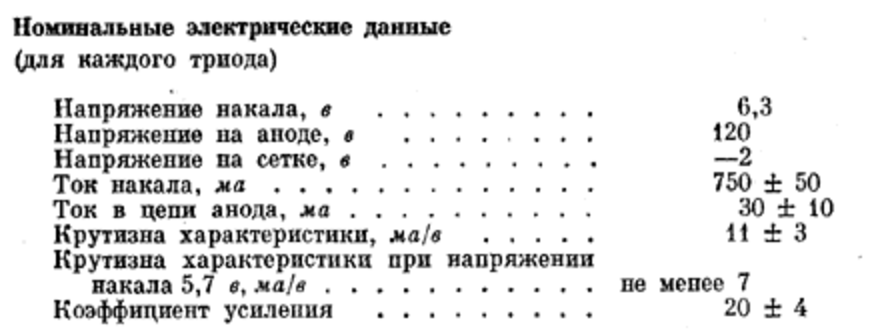
| Nominal electrical data, each triode | Value |
|---|---|
| Heater voltage (напряжение накала), V | 6.3 |
| Anode voltage (напряжение на аноде), V | 120 |
| Grid voltage (напряжение на сетке), V | −2 |
| Heater current (ток накала), mA | 750 ± 50 |
| Current in the anode circuit (ток в цепи анода), mA | 30 ± 10 |
| Transconductance (крутизна характеристики), mA/V | 11 ± 3 |
| Transconductance at a heater voltage of 5.7 V (при напряжении накала 5,7 в), mA/V | ≥ 7 |
| Amplification factor (коэффициент усиления) | 20 ± 4 |
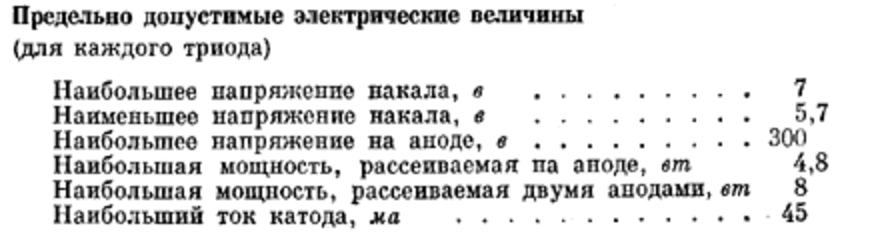
| Limiting permissible electrical values, each triode | Value |
|---|---|
| Highest heater voltage (наибольшее напряжение накала), V | 7 |
| Lowest heater voltage (наименьшее напряжение накала), V | 5.7 |
| Highest anode voltage (наибольшее напряжение на аноде), V | 300 |
| Highest power dissipated at the anode (наибольшая мощность, рассеиваемая на аноде), W | 4.8 |
| Highest power dissipated by both anodes (наибольшая мощность, рассеиваемая двумя анодами), W | 8 |
| Highest cathode current (наибольший ток катода), mA | 45 |

| Limiting permissible electrical values, continued | Value |
|---|---|
| Highest voltage between cathode and heater (наибольшее напряжение между катодом и подогревателем), V | 200 |
| Highest resistance in the grid circuit (наибольшее сопротивление в цепи сетки), MΩ | 1 |
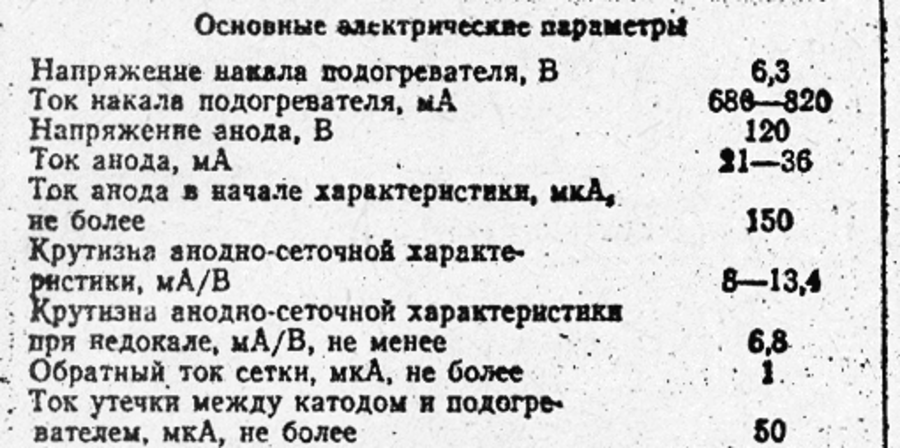
| Main electrical parameters | Value |
|---|---|
| Heater voltage (напряжение накала подогревателя), V | 6.3 |
| Heater current (ток накала подогревателя), mA | 68…–820 (the third digit of the first figure is blotted in the scan) |
| Anode voltage (напряжение анода), V | 120 |
| Anode current (ток анода), mA | …1–36 (the first digit is blotted in the scan) |
| Anode current at the start of the characteristic (ток анода в начале характеристики), µA | ≤ 150 |
| Transconductance of the anode-grid characteristic (крутизна анодно-сеточной характеристики), mA/V | 8–13.4 |
| Transconductance of the anode-grid characteristic at underheating (при недокале), mA/V | ≥ 6.8 |
| Reverse grid current (обратный ток сетки), µA | ≤ 1 |
| Leakage current between cathode and heater (ток утечки между катодом и подогревателем), µA | ≤ 50 |
For the transconductance at underheating the label gives ≥ 6.8 mA/V; the handbook gives ≥ 7 mA/V at a heater voltage of 5.7 V.
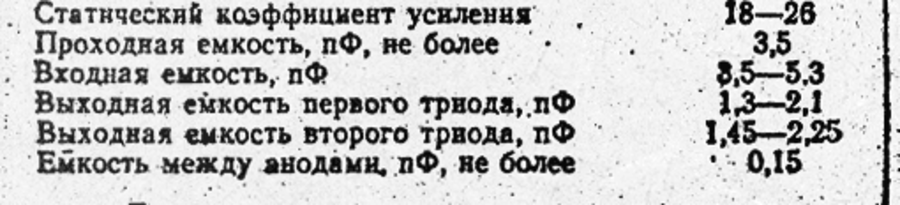
| Main electrical parameters, continued | Value |
|---|---|
| Static amplification factor (статический коэффициент усиления) | 18–26 |
| Transfer capacitance (проходная емкость), pF | ≤ 3.5 |
| Input capacitance (входная емкость), pF | ….5–5.3 (the first digit is smudged in the scan) |
| Output capacitance of the first triode (выходная емкость первого триода), pF | 1.3–2.1 |
| Output capacitance of the second triode (выходная емкость второго триода), pF | 1.45–2.25 |
| Capacitance between the anodes (емкость между анодами), pF | ≤ 0.15 |
For the capacitance between the anodes the label gives ≤ 0.15 pF; the handbook ≤ 0.1 pF. For the output capacitance the label gives up to 2.25 pF for the second triode; the handbook ≤ 2.1 pF for each triode.
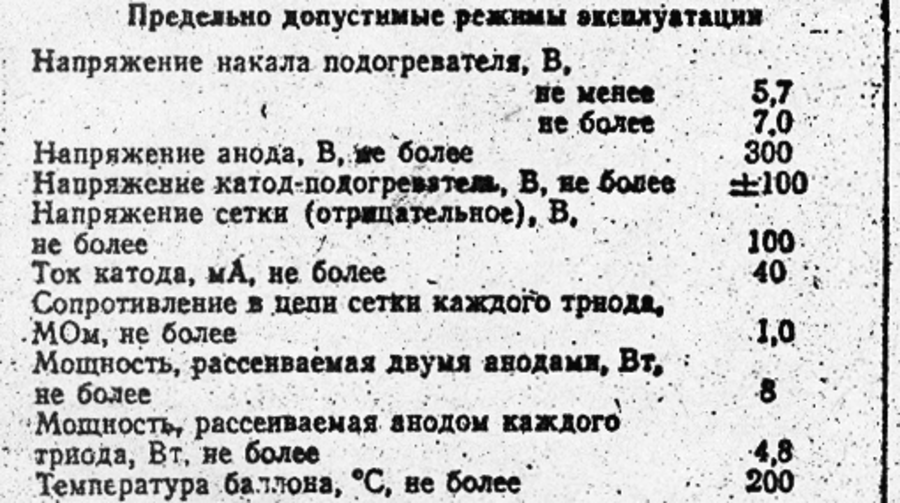
| Limiting permissible operating modes | Value |
|---|---|
| Heater voltage (напряжение накала подогревателя), V | ≥ 5.7, ≤ 7.0 |
| Anode voltage (напряжение анода), V | ≤ 300 |
| Cathode-heater voltage (напряжение катод-подогреватель), V | ≤ ±100 |
| Grid voltage, negative (напряжение сетки (отрицательное)), V | ≤ 100 |
| Cathode current (ток катода), mA | ≤ 40 |
| Resistance in the grid circuit of each triode (сопротивление в цепи сетки каждого триода), MΩ | ≤ 1.0 |
| Power dissipated by both anodes (мощность, рассеиваемая двумя анодами), W | ≤ 8 |
| Power dissipated by the anode of each triode (мощность, рассеиваемая анодом каждого триода), W | ≤ 4.8 |
| Bulb temperature (температура баллона), °C | ≤ 200 |
The label gives 40 mA for the cathode current; the handbook 45 mA. For the voltage between cathode and heater the label gives ±100 V; the handbook 200 V.
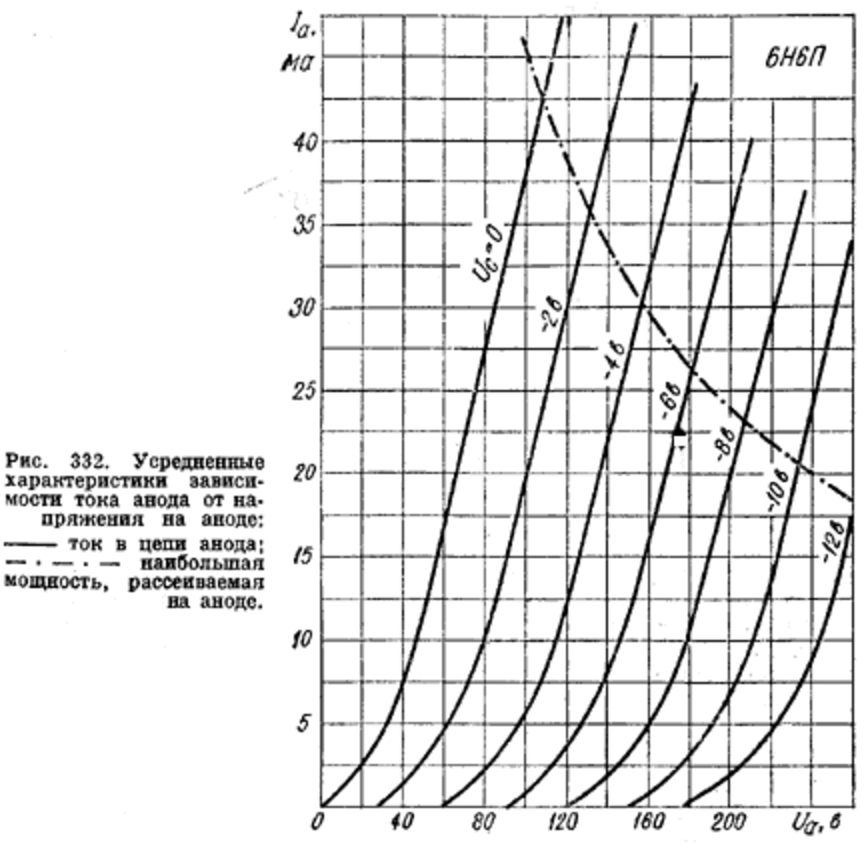
The vertical axis is Ia in mA (ма), numbered 5, 10, 15, 20, 25, 30, 35 and 40; the grid goes on above 40 without numbers. The horizontal axis is Ua in V (в), numbered 0, 40, 80, 120, 160 and 200, with «Ua, в» printed after 200. The type, 6Н6П, is lettered in a box in the top right corner. The key under the caption says the solid lines are the current in the anode circuit (ток в цепи анода) and the dash-dot line is the highest power dissipated at the anode (наибольшая мощность, рассеиваемая на аноде).
The seven solid curves are labelled by grid voltage: Uc = 0, then −2, −4, −6, −8, −10 and −12 V. The 0 curve starts at the origin, and the others start further and further right along the Ua axis, in that order. Each one bends upward from the bottom axis and then climbs steeply, and none of them cross. The −12 V curve is still bending where it meets the right edge. The 0 curve runs off the top of the grid and the −2 V curve ends just below the top. The −4, −6 and −8 V curves stop inside the grid, each lower and further right than the one before. The −10 and −12 V curves run to the right edge. A small black triangle is printed on the −6 V curve, just below its label.
The dash-dot line starts near the top of the grid, between 80 and 120 on the Ua scale. It falls steeply at first and then more gently, crossing every solid curve from 0 to −10 V. It ends at the right edge a little below the 20 mA mark, just above the point where the −12 V curve meets that edge.



Precious materials in one tube: gold (золота), 0.008 g on the grid (на сетке). Technical conditions (технические условия): ОДО.330.095 ТУ.
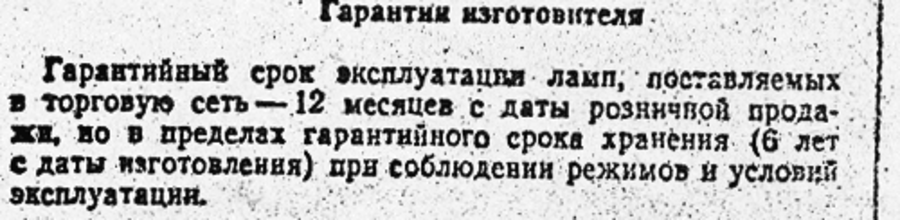
The warranty period of operation for tubes supplied to the retail trade (в торговую сеть) is 12 months from the date of retail sale, but within the warranty storage period (гарантийного срока хранения) of 6 years from the date of manufacture, provided the operating modes and conditions are observed.
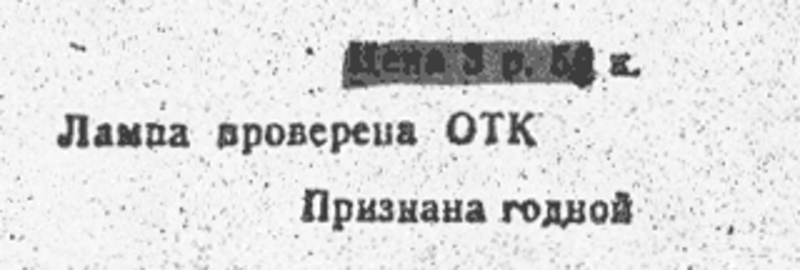
The price line, «Цена … р. … к.» (price, rubles, kopecks), is covered by a grey band, and its figures can’t be read. Below it: the tube was checked by ОТК (лампа проверена ОТК) and found fit (признана годной).

All four are in «Радио» (Radio):
Related products
Resources
Documentation
Browse our complete library of technical specifications and documentation.
Browse DatasheetsProducts
Explore our full inventory of vintage tubes, nixies, and capacitors.
View ProductsQuestions?
Need help finding the right part or datasheet? We're here to help.
Get in Touch
